Diarrheal disease is a leading cause of death for children under five. Oral rehydration solution (salt and sugar) can prevent most of those deaths. New Incentives is looking to scale the distribution of ORS through the same platform that delivers cash transfers to caregivers across northern Nigeria. Learn more about our current funding gap.
New Incentives already reaches caregivers at routine immunization visits across northern Nigeria.
The ORS pilot layers onto this existing infrastructure, which is the key reason costs stay at $1 per child.


.png)


.png)


ORS is the WHO-endorsed frontline response. It’s cheap, safe, and extraordinarily effective at preventing dehydration.
The problem is not that the global health community doesn't know ORS works. The problem is that ORS doesn't reliably reach caregivers in high-burden communities when they need it.
ORS is one of the most effective treatments in child health and can prevent most deaths from dehydration caused by diarrhea.
Our household coverage surveys show that approximately 28% of 6- to 12-month-olds were given ORS during their last episode of diarrhea.
Our household coverage surveys suggest that approximately 53% of infants aged 6 - 12 months experienced diarrhea in the previous four weeks, highlighting the high disease burden in the areas where we work.

Clinic Staff Lead Education
All diarrhea counseling and ORS guidance comes from clinic staff. This protects clinical authority, strengthens the existing health system, and makes the model genuinely scalable.
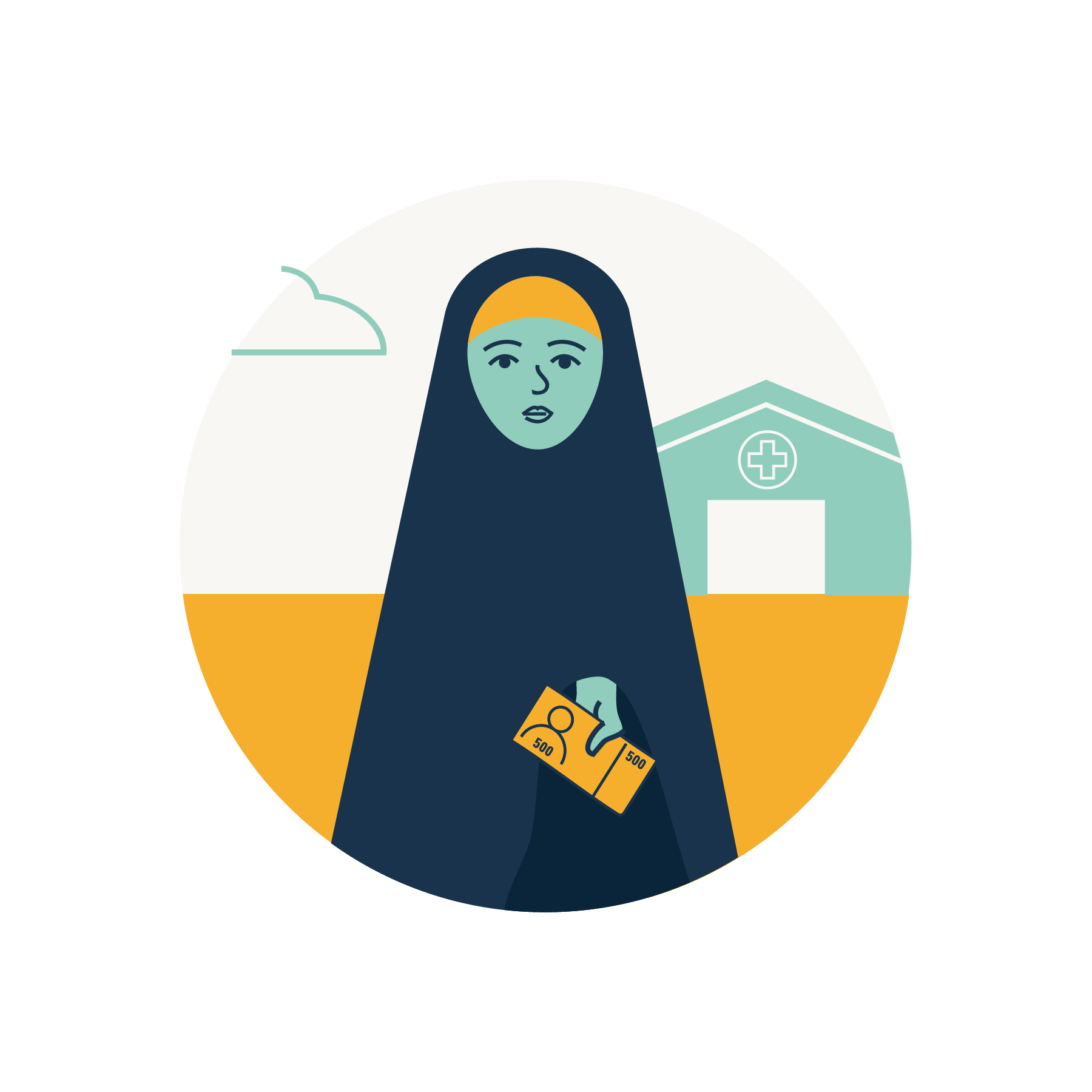
Field Officers Handle Logistics
New Incentives manages procurement, storage, delivery, and verification. ORS distribution follows the same workflow as cash: verification is required for each distribution, dates are written on sachets to prevent reuse, and off-site reviewers verify all distributions.
Supply Chain Is Built for Scale
We maintain a minimum two-week stock buffer. Staff report on stock weekly, and we compare it to their expected stock based on the number of verified disbursements throughout the week. A forecasting dashboard projects future needs six weeks out.
ORS is among the best-evidenced interventions in global health. When used correctly and promptly, research shows it can reduce diarrhea-related mortality by up to 93%.
A study in Uganda showed that free, preemptive delivery of ORS increased usage by 19 percentage points and also improved the timeliness of treatment, which matters for survival outcomes.
We are open to rigorous evaluation designs where feasible, including potential randomized controlled trials, and welcome funders who want to co-design an evaluation plan that is decision-relevant and proportionate to the opportunity.
New Incentives launched ORS distribution in May 2025, beginning with a handful of clinics in Gombe State. By September 2025, we had expanded to all of Funakaye LGA. This was our first major program expansion since scaling our CCTs for routine immunization program.


Shifted to clinic-led education
We initially had field officers provide ORS education. We shifted this responsibility to clinic staff in December 2025. This protects clinical authority, reinforces public health clinic ownership, and creates a more scalable and credible model. The state enthusiastically supported this change.
Introduced quarterly clinic support
We are working with the state to implement small direct-to-facility transfers tied to ORS education compliance, incentivizing consistent delivery while keeping clinical authority where it belongs.
Verification mirrors cash distribution
Evidence is required for each distribution. Dates are written on sachets to prevent reuse. Off-site reviewers verify each distribution. Weekly stock reports with photo confirmations are submitted by staff. This all wraps up into real-time stock monitoring and expiration date tracking.
Successfully incorporated outreach sites
ORS distribution now reaches caregivers not just at fixed clinics but at outreach sessions, which has allowed us to expand access to the remote communities.
Addressed early misconceptions
Through caregiver focus groups, we learned about misconceptions around teething causing diarrhea (and not needing to be treated) and that some mothers thought stool had to be green in order to be considered diarrhea. We refined educational materials, incorporating feedback from caregivers, clinic staff, and state health officials.
We plan to expand to 10 states.
The infrastructure, monitoring systems, and staff training are in place. What's needed now is funding and final state approvals.
Expansion to each state requires three conditions to be met before we proceed.
1 - State government approval from the relevant State Ministry of Health or State Primary Health Care Development Agency. We’ve received approval for six states to date.*
2 - Funding secured to cover ORS procurement, logistics, and program costs in that state
3 - Rapid Assessment data confirming high diarrhea incidence and low ORS usage rates in that geography.
*On state concerns about preemptive distribution: Some state health officials initially raised concerns about distributing ORS before an episode of diarrhea occurs. We have addressed this by sharing the evidence, which shows preemptive distribution increases both ORS usage and timeliness of treatment. To date, state stakeholders have been receptive to this evidence, and we do not expect this to be an enduring obstacle.
$5.3M to reach 1.6M children per year through March 2029.
$1 per child per year—because this builds on infrastructure that already exists.
A donor funding ORS isn't building a new program. They're loading cargo onto a ship that's already sailing.
The platform is built. The pilot is running. What stands between the ORS pilot we are running in Funakaye and the 1.6 million infants we reach annually is funding. At $1 per child, this has the potential to be one of the most cost-effective opportunities in child survival today.
You are not funding ORS.
You are funding ORS that actually reaches infants.
If you have questions, please reach out to liz.hixson@newincentives.org.
_Shafi_u%20Ibrahim%20(Infant).jpg)
.svg)
.svg)


.png)