.svg)
.svg)
Home - Blog
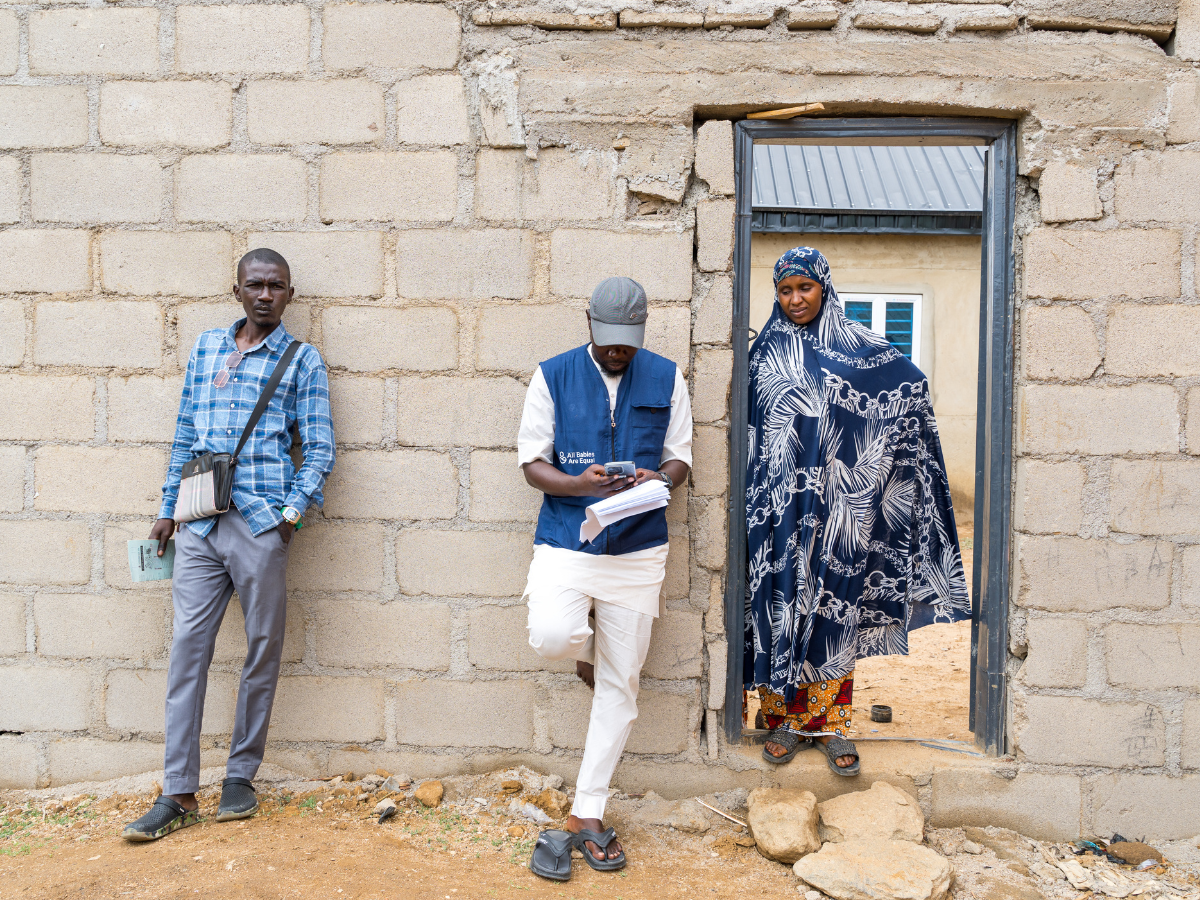
In 2020, a randomized controlled trial (RCT) found that New Incentives' cash incentives for vaccination program more than doubled the proportion of fully immunized children, increasing coverage from roughly a quarter to just over half of all infants. But proving a program works in a pilot stage is not a guarantee that it will work at scale or maintain the same impact year over year.
Monitoring impact at scale requires frequent, accurate, and representative data. In 2025 alone, New Incentives conducted more than 26,000 household surveys and screened over 100,000 additional households to measure immunization coverage and health-seeking behavior.
Behind each of those numbers is a field officer collecting data, a community guide, and a day that begins before 7 a.m.
At 6:52 a.m., Nafaraddeen Abdullahi reviews the security recommendations for the route he will follow that day, logs into his mobile app, records his coordinates, and marks the start of his workday. A car is already waiting to take him to Toro Local Government Area in Bauchi in northeastern Nigeria, about 94 kilometers away. The route is familiar to Nafaraddeen, but the exact location is not.
The assignment is a defined enumeration area, a half-kilometer grid selected through a population-weighted random process (more details here). Nafaraddeen does not choose where to go; he follows the coordinates.
“In theory, my task may be simple to describe,” says Nafaraddeen. “I arrive at the location, move through the grid, structure by structure, building by building, and collect data that reflects reality, not my convenience.”
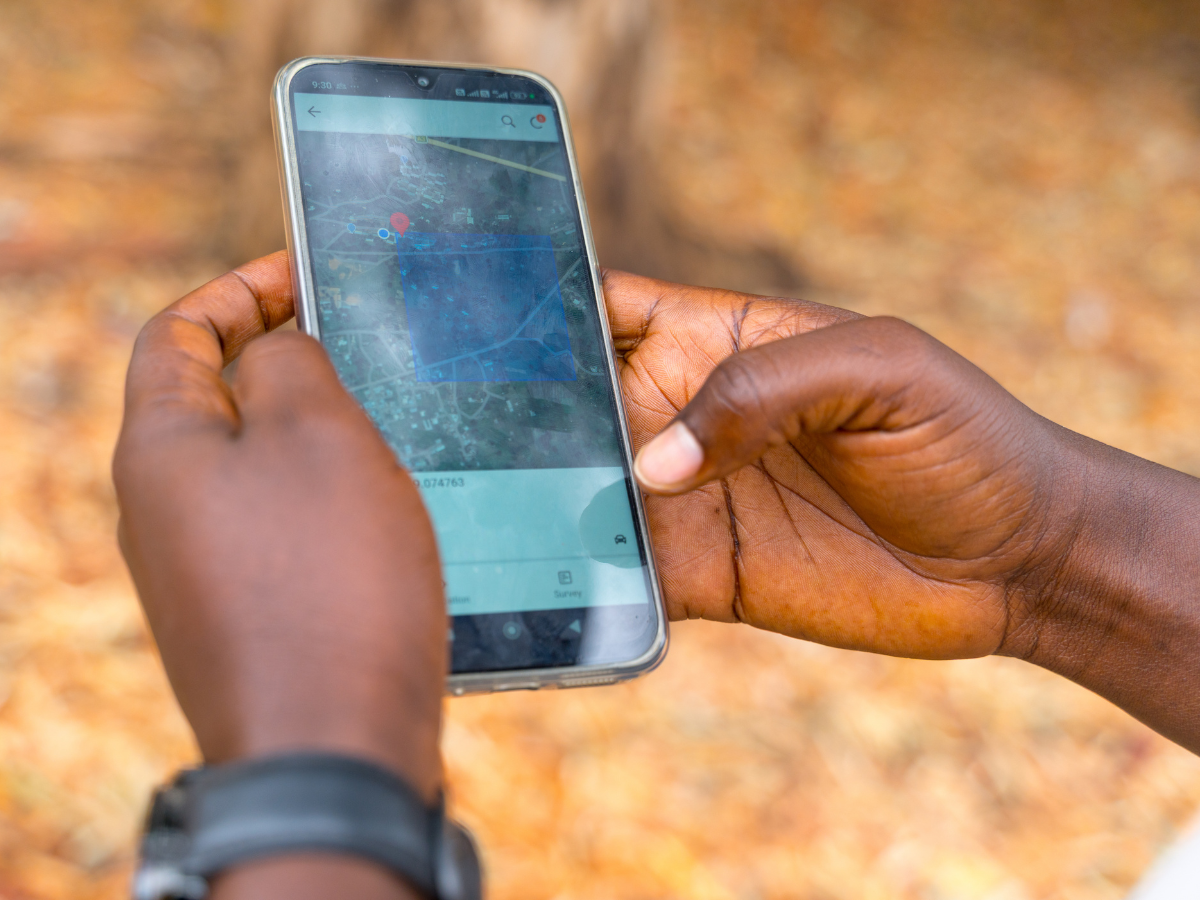
When Nafaraddeen arrives in Toro, he opens his mobile app again and marks his arrival in a community called Jawad. The coordinates lead to the government secondary school. If field officers were able to choose where to start or what to prioritize, data could skew toward easier-to-reach households. Fixing the starting point and movement pattern reduces that risk.
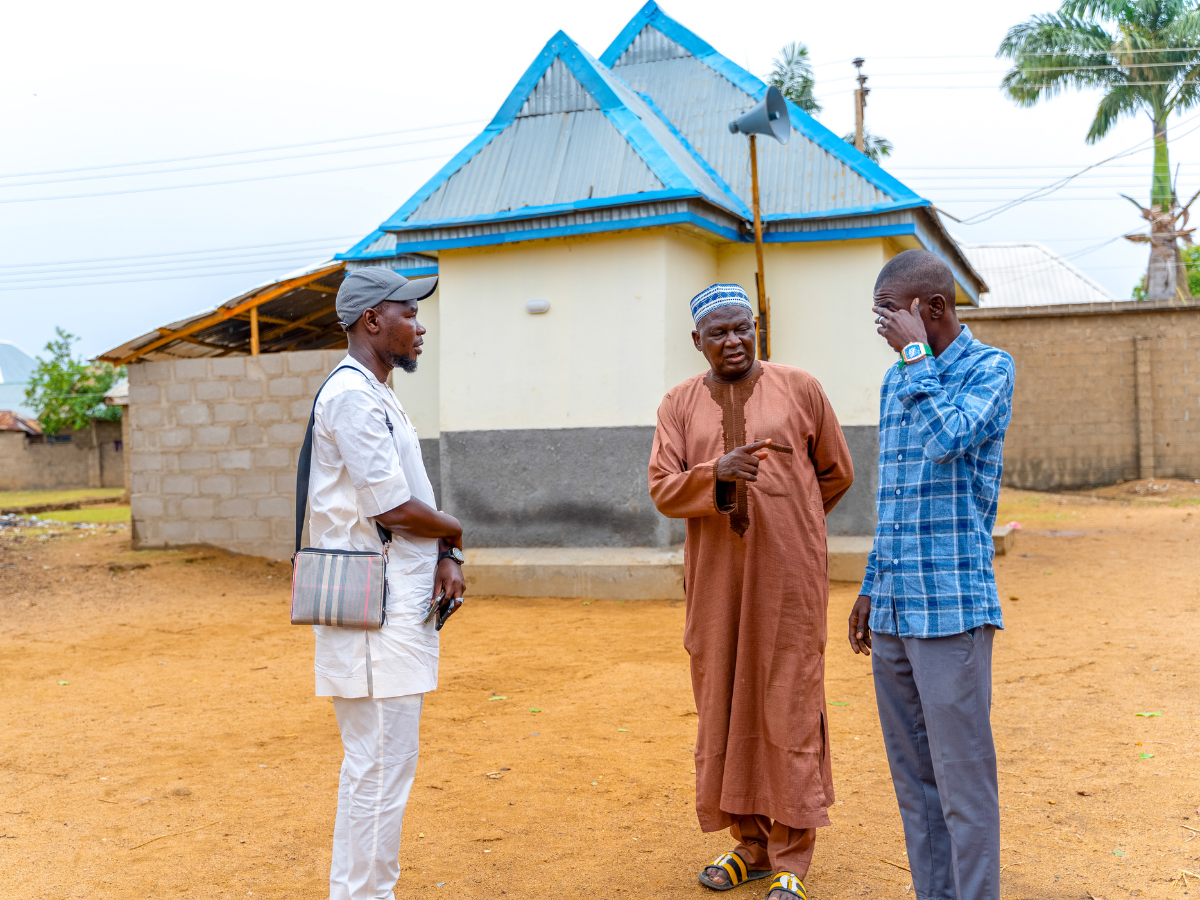
Before the survey begins, Nafaraddeen asks to speak with the community leader, Muhammad Tata. Tata helpfully assigns his son, Abba, to guide the team through the community.
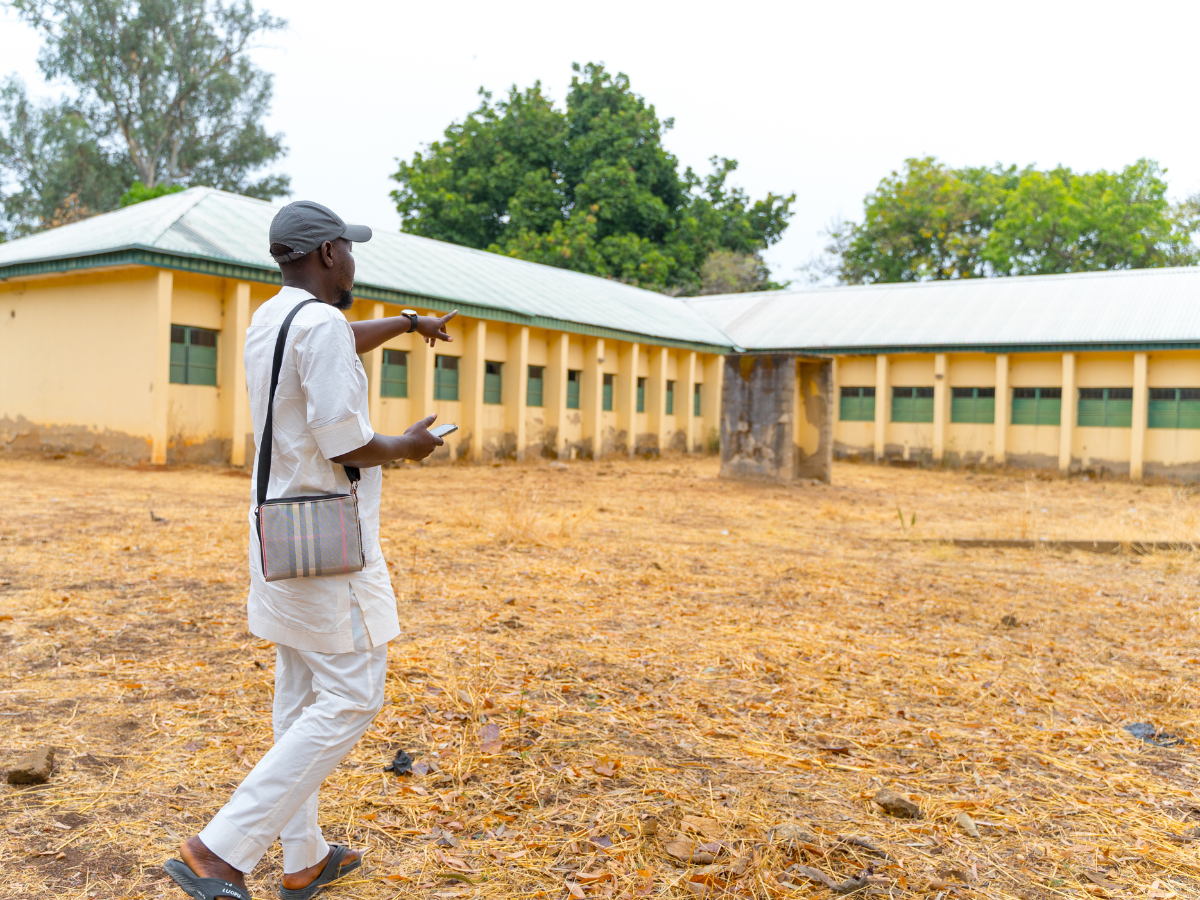
Inside the school, classes are in session. An L-shaped building stands to one side. Open ground dotted with tall trees stretches ahead. The soil is still damp from the previous day's rain. There are no households nearby. But Nafaraddeen does not move elsewhere. Every structure is assessed and recorded. Classrooms, offices, and empty buildings are classified as non-residential and skipped.
“Our protocol requires that every structure be accounted for, residential or not,” he explains.

The team moves deeper into the community, passing empty buildings, offices, and classrooms before reaching the first residential compound. A woman is sweeping outside. Nafaraddeen and Abba stop a few meters away, introduce themselves, explain their purpose, and ask for consent to ask a few screening questions. The family has no child living there in the 6- to 12-month range. That age range is the prerequisite to conducting a full survey, which collects data on vaccination status, diarrhea prevalence, ORS (oral rehydration solution) usage, and other information. The household is recorded as a screened case, and the team moves on.
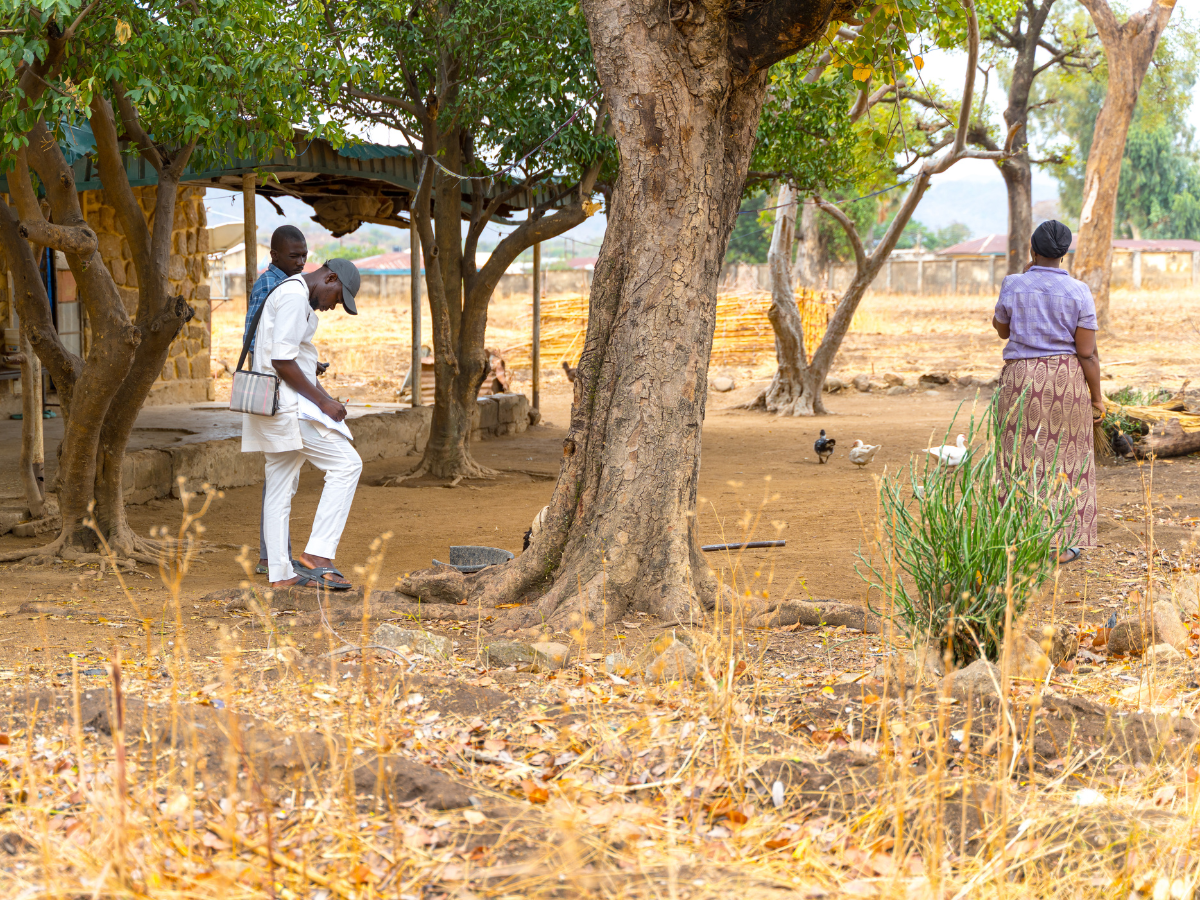
The patterns repeat and are documented: caregivers away from the home; husbands present, but no eligible child; eligible baby and caregiver both on the premises. At one entrance, a mother holds her infant wrapped in an atampa, a colorful traditional printed wrapper. The child is younger than six months old. Screened and recorded.
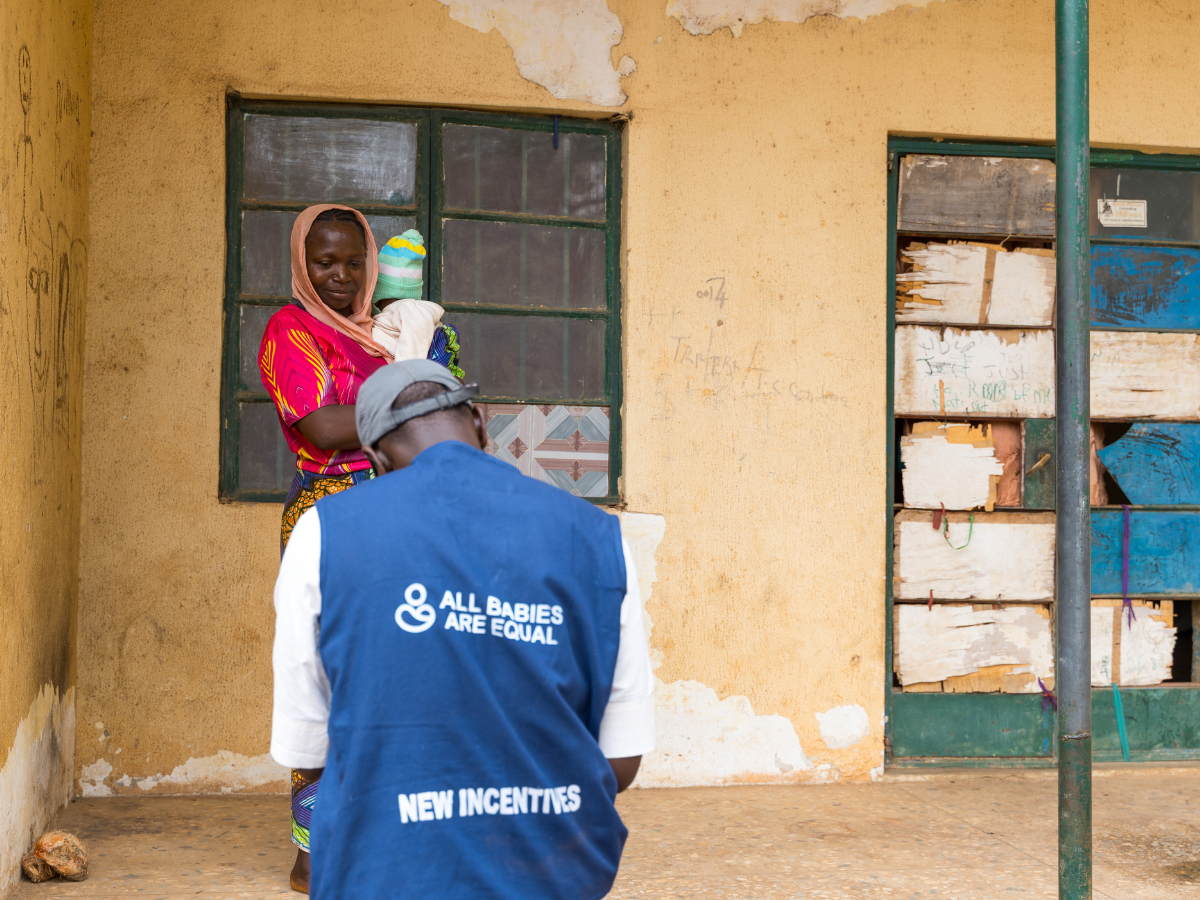
The team’s work depends on trust. While every household approached during this visit agrees to participate, Nafaraddeen explains that this is not always the case. "Not every door opens," he says. "If that happens, we record it and move on." Participation is voluntary. No pressure, no persuasion. Both research ethics and data integrity depend on it. (On average, around 1% of households choose not to participate in surveys.)
By 12:35 p.m., Nafaraddeen and Abba have covered more than 20 structures without finding a single eligible child. Sometimes this happens. On other survey days in this area, it took Nafaraddeen between two and four hours, and between 15 and 23 household visits, to find three eligible children.

Not long after, they arrive at another household where a woman named Christiana Yusuf sits on a low wooden bench against a mud wall, her child resting on her lap. An elderly man sits nearby. Nafaraddeen and Abba greet them and first speak briefly with the elder. Then Nafaraddeen turns to Christiana.
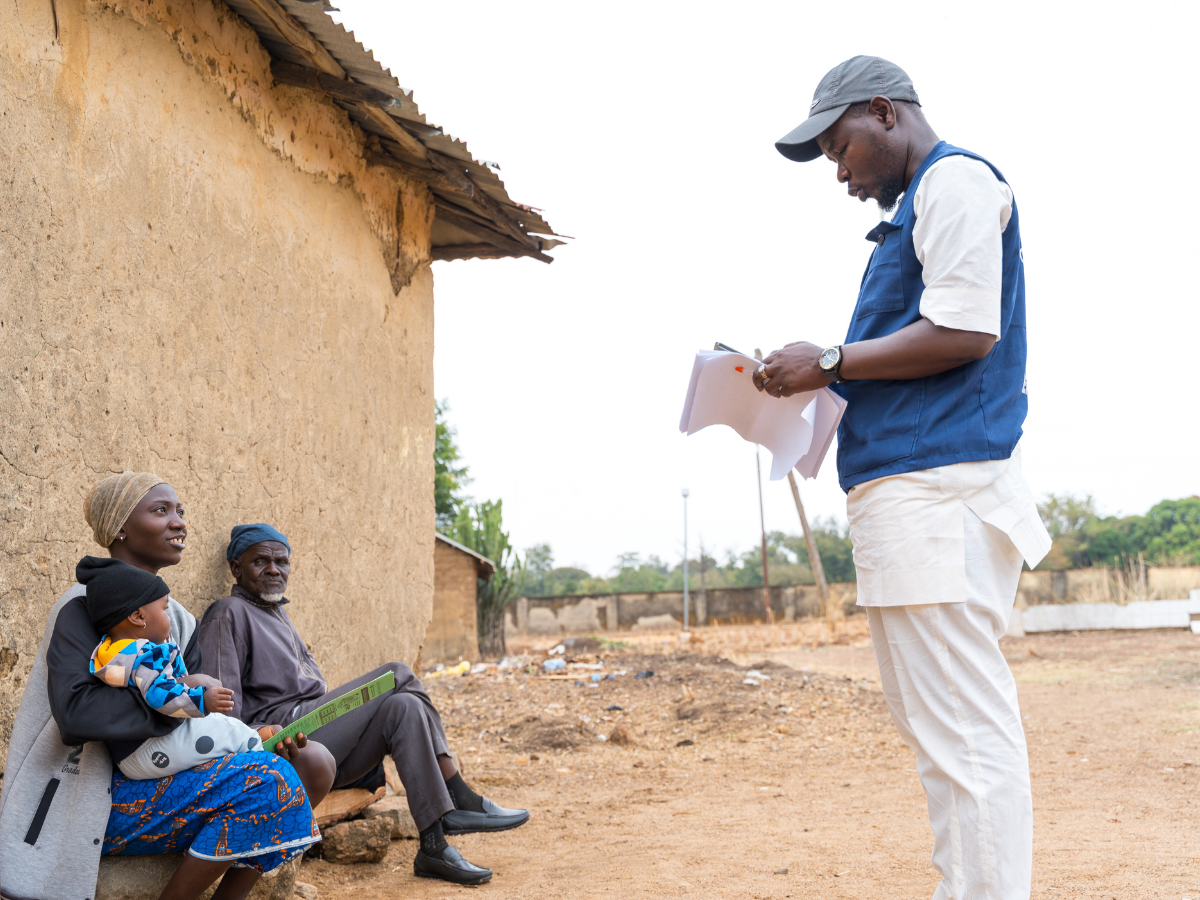
Her son, Milar, falls within the 6- to 12-month range, so this household is eligible for the full survey. Nafaraddeen proceeds carefully, asking about vaccination history, visits to the health facility, episodes of recent diarrhea, and treatment given. Christiana responds without hesitation. The whole survey takes around 12 minutes.
She says she brought Milar for routine immunizations because vaccines prevent disease and help children grow stronger. She is also enrolled in the NI-ABAE program and says the support covers her transport to and from the clinic. “When they [Nafaraddeen and Abba] came, they spoke with our elder first,” she says. “Nafaraddeen explained everything clearly in Hausa. That made me comfortable to answer his questions.”
By the end of the day, Nafaraddeen and his guide had visited 36 households and completed three surveys. Finding an eligible child can be a painstaking process. Some households have no children in the required age range. Others are unoccupied, and many simply do not meet the study criteria. But each data entry follows the same process, because each one may be checked and verified.
In Sabon Kaura, Bauchi LGA, Timothy Boniface conducts a different kind of survey on the same day. He is not collecting new data; he is verifying it. Today, his role is to revisit households already surveyed by another field officer and confirm that what was recorded matches what was in the field. This is done for a significant number of survey days.
He begins the same way as Nafaraddeen, meeting the community leader, Mallam Musa, explaining his purpose, and requesting permission to proceed. Mallam Musa's 19-year-old daughter, Zainab, is assigned as Timothy's guide.
“Female helpers are the best for us in most communities where you can't, as a man, go into houses due to cultural and religious norms,” Timothy says.
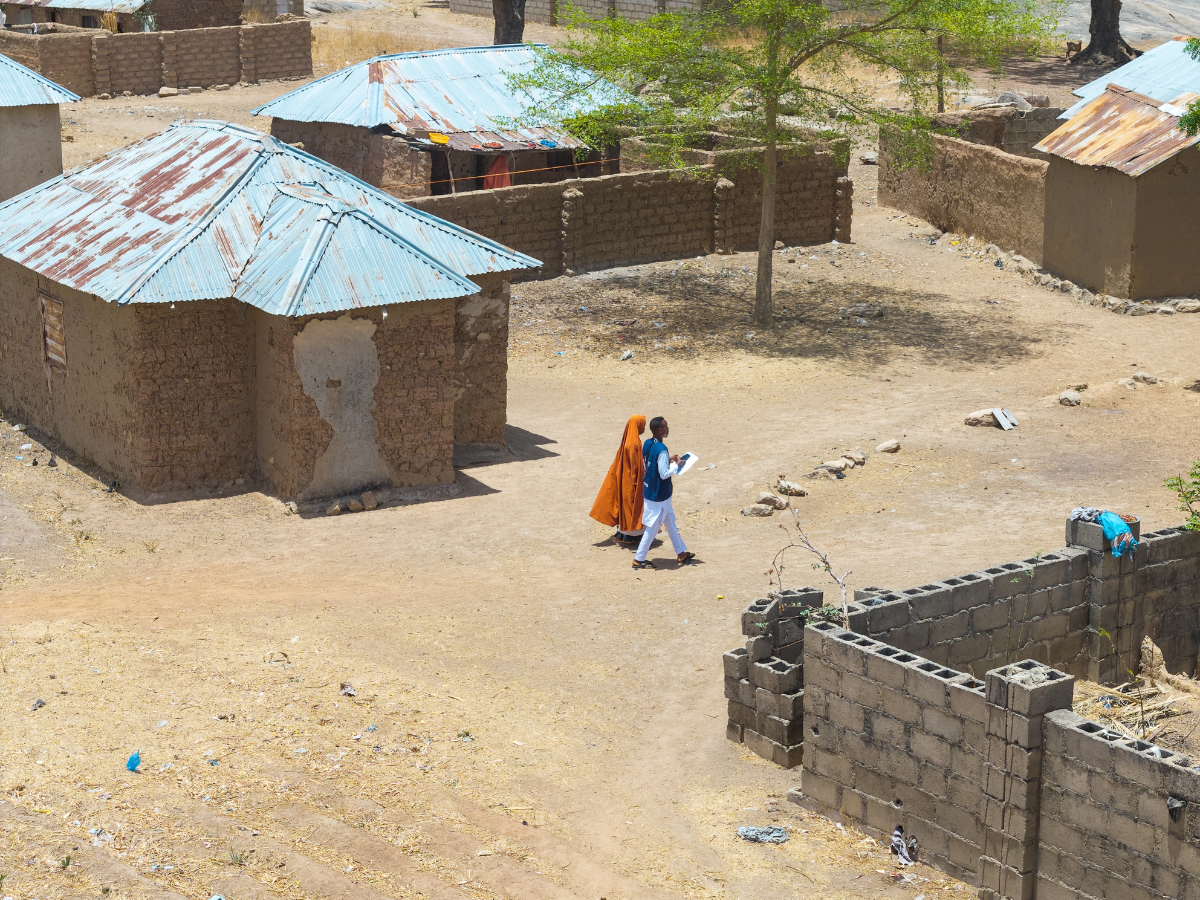
At each home, Timothy asks a subset of the original survey questions. The answers are automatically compared with the earlier record. A match means the data passes. A discrepancy is flagged for review. This back-check is one of several quality-control layers New Incentives institutes. Map checks verify movement patterns using GPS data. Audio checks review recorded interviews to confirm that questions were asked correctly. If a batch fails, it is discarded and repeated in full. “There's no room for error or bias,” Timothy says. In our next blog story, we will follow Timothy to see how New Incentives tests the reliability of the data behind every coverage estimate.
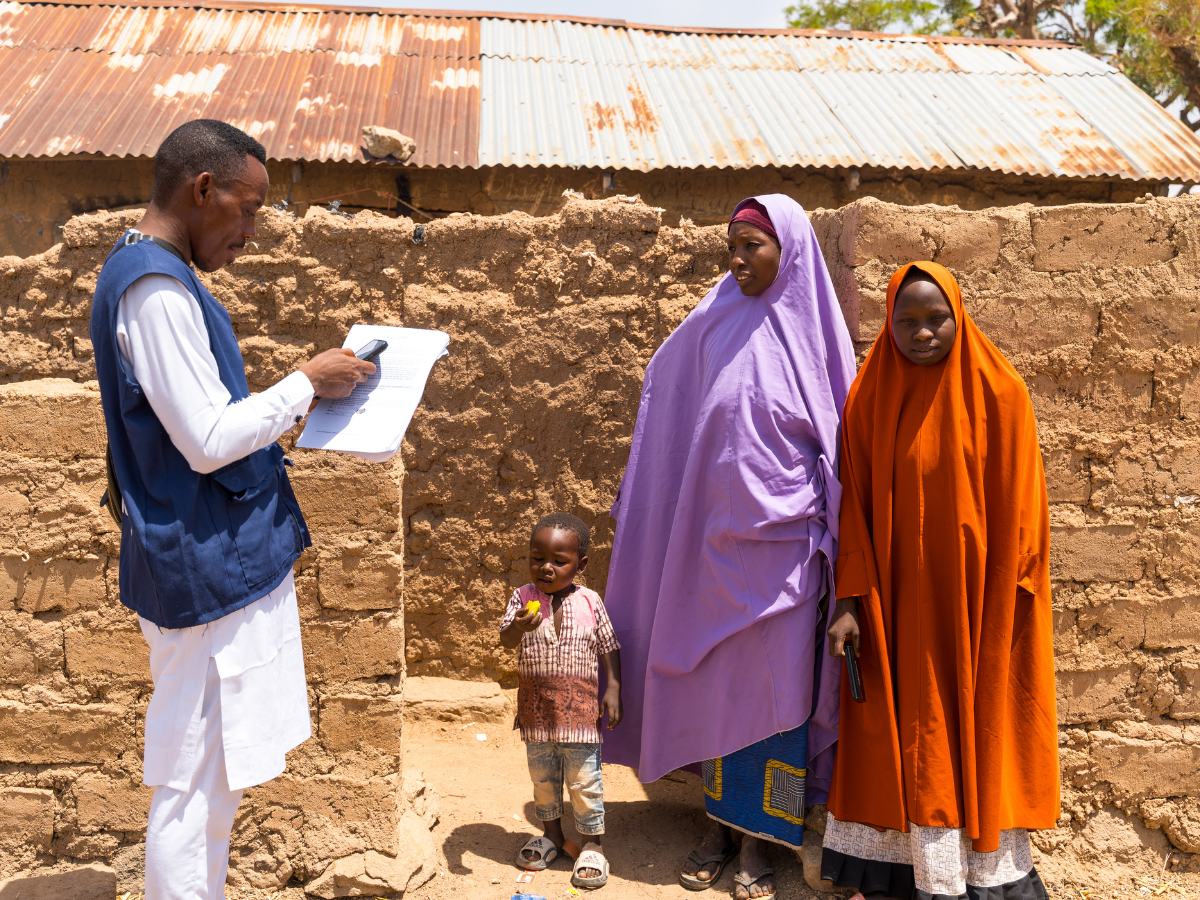
From a distance, data collection can appear abstract. Up close, it is often a slow, meticulous process: a field officer navigating unfamiliar terrain, mothers pausing their days to answer questions, and a second officer retracing those steps to confirm households were properly identified and caregiver answers were recorded correctly.
Each data point carries the weight of that effort: the conversation, the trust, and the moment a caregiver like Christiana or Jamila decides to answer. That trust, between field officers, community leaders, and the families who share information, is what makes the data usable.
Data collected through surveys feeds directly into how New Incentives makes decisions. Coverage results are reported to state health stakeholders, who use them to understand how routine immunization changes across their jurisdictions. Internally, the data helps NI identify areas falling below target coverage rates, areas where coverage appears to be plateauing, and areas where progress is strong.
Together with the original RCT, this ongoing data gives us a reliable estimate of where the program is working, where it is not, and where children are still being missed. This enables us to keep a constant pulse on our program's impact and cost-effectiveness as we scale.
Get the latest blogs and program updates sent to your inbox. We send emails sparingly.


Follow us on social media to stay up to date on our rapid growth.

.png)

.png)