.svg)
.svg)
Home - Blog
All Babies Convenes Cold Chain Roundtable to Strengthen Vaccine Supply Coordination across Northern Nigeria
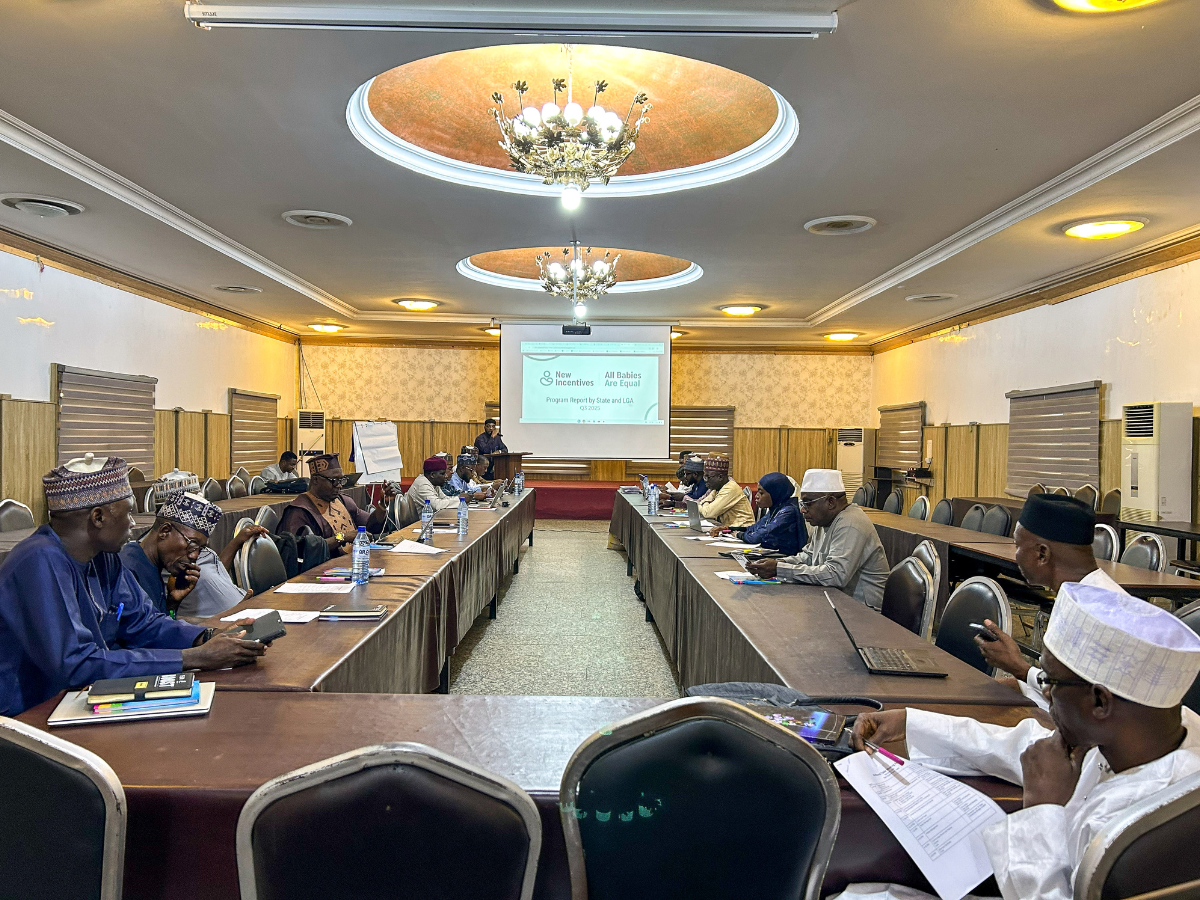
To strengthen coordination and accountability within Nigeria’s vaccine supply chain, the All Babies program brought together cold chain officers from 14 states, including Adamawa, Borno, and Taraba, to improve last-mile vaccine delivery and ensure every child receives life-saving immunization on time.
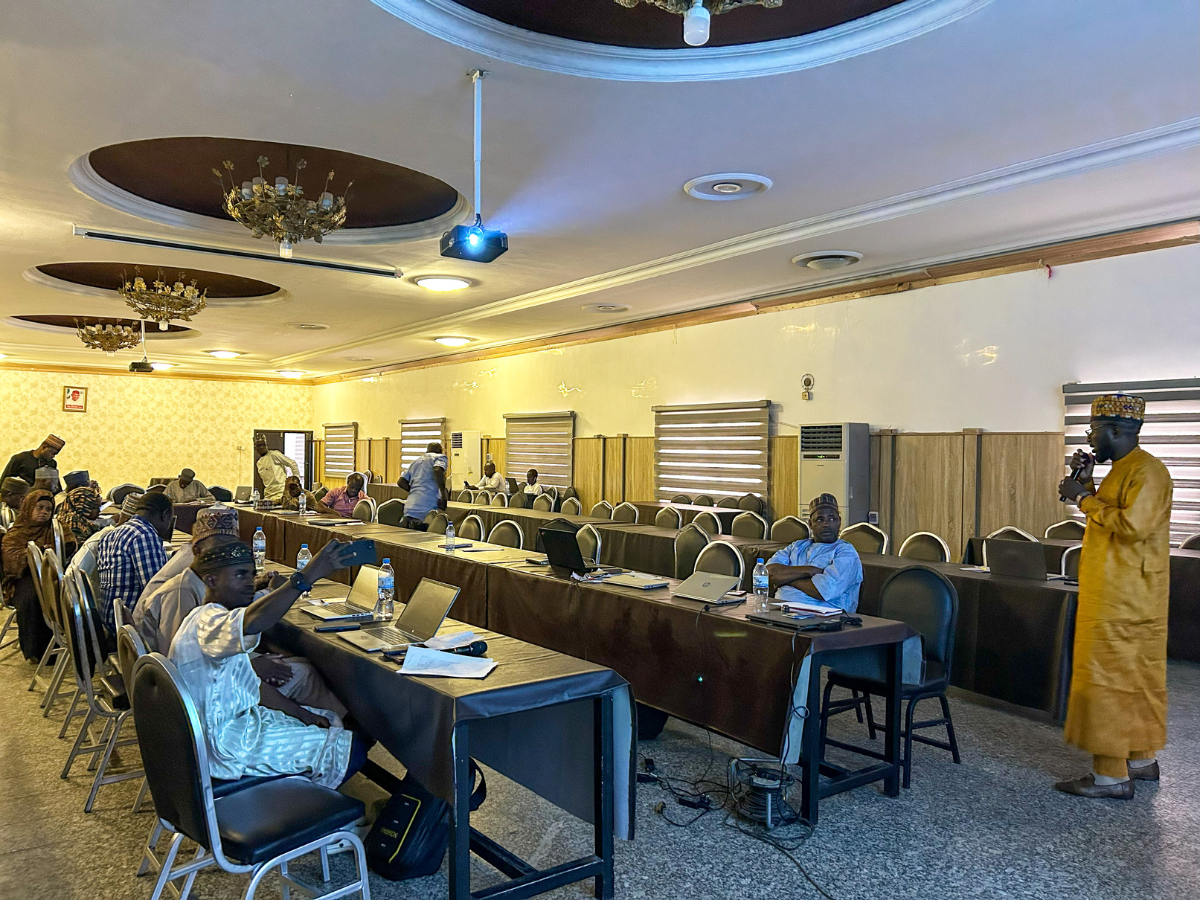
The conference room at Tahir Guest Palace in Kano pulsed with purposeful energy as state cold chain officers (SCCOs) from across northern Nigeria settled into their seats. From Sokoto to Taraba, from Niger to Yobe, the participants shared one goal of ensuring that all vaccines sent from the national cold store reach the children they are intended for.
Over three days, October 23–25, 2025, the All Babies Roundtable on Cold Chain Coordination gathered 35 representatives from zonal and state cold chain offices, the Kano State Primary Health Care Board, development partners, and the All Babies team. The discussions were technical, yet deeply practical on how to bridge the persistent gap between state vaccine stores and rural clinics and how to make vaccine data systems more reliable, transparent, and timely.
“We are here to streamline achievements recorded so far and [discuss] the challenges encountered in the course of our work, in order to identify solutions and strengthen progress,” explained Muhammad Ibrahim, Katsina SCCO.
“New Incentives assists these state cold chain officers to conduct supervisory visits to local government cold chain stores and health facilities. These visits help ensure that vaccines reach the clinics and are properly managed.”
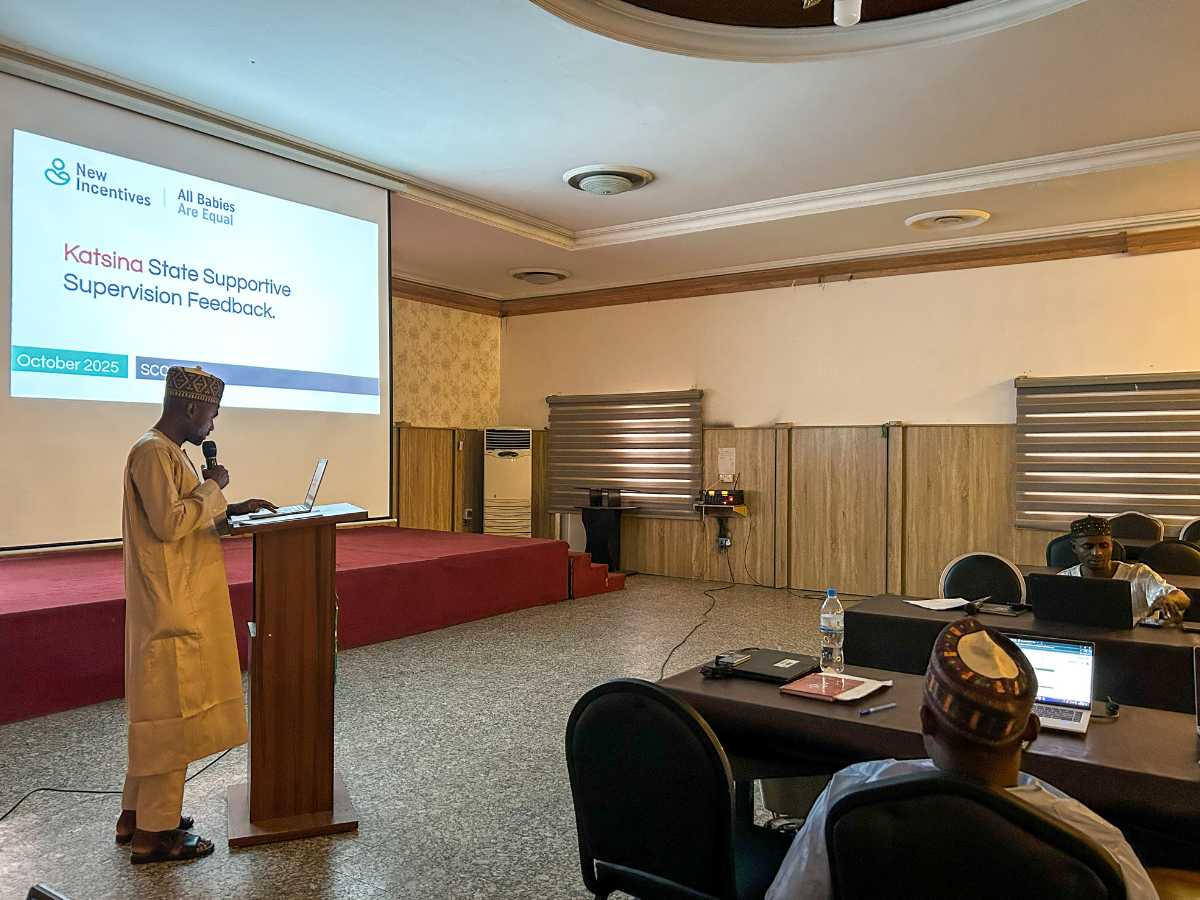
Field Visits: Monitoring Routine Immunization and Cold Chain Operations in Gwale LGA
On October 23, the first day of the convening, All Babies, alongside state and national cold chain officials, conducted field visits to Gwale, Tarauni, and Nassarawa Local Government Areas, after they collectively assessed the Kano State Cold Store. The Gwale team visited two high-volume primary health care facilities—Ja’en PHC and Kabuga PHC—to observe routine immunization sessions, verify vaccine stock and records, and review cold chain management practices. At Ja’en PHC, the team observed a well-attended session with over 100 caregivers present and provided on-the-spot guidance to address gaps in temperature monitoring and documentation. Observations from the field visits informed the technical discussions during the roundtable.
System of Many Links
In Nigeria’s immunization system, cold chain officers play a critical role. They ensure that vaccines—sensitive to heat and time—travel safely from national depots to remote communities. Any delay, broken link, or missed report can disrupt vaccination sessions for hundreds of children.
The roundtable provided a platform to discuss these challenges openly. Participants reviewed the Open Source Logistics Management Information System (OpenLMIS), Nigeria’s national digital vaccine-tracking platform, and discussed ways to improve real-time updates. They also examined trends from the All Babies program data, which define a “stockout” as any instance where a vaccine is unavailable at a scheduled immunization session.
“By using this operational definition,” explained Nura Muhammad, All Babies Stakeholder Relations Director, “we’re focusing on the level that matters most—the clinic. That’s where missed doses happen, and that’s where we can fix them.”
The roundtable also included a targeted training session for state cold chain officers on Excel and Google Sheets, temperature and stock data management, cold-chain data interpretation, vaccine stock control, and waste management.
Evidence and Impact
During the technical session, Nana Ize, Monitoring and Learning Officer 2 at All Babies, presented fresh data from the Q3 2025 program report. The findings reflected tangible progress across partner states. Katsina and Zamfara saw the sharpest declines in zero-dose infants since the program launched—each with a 40-percentage-point reduction since rollout.
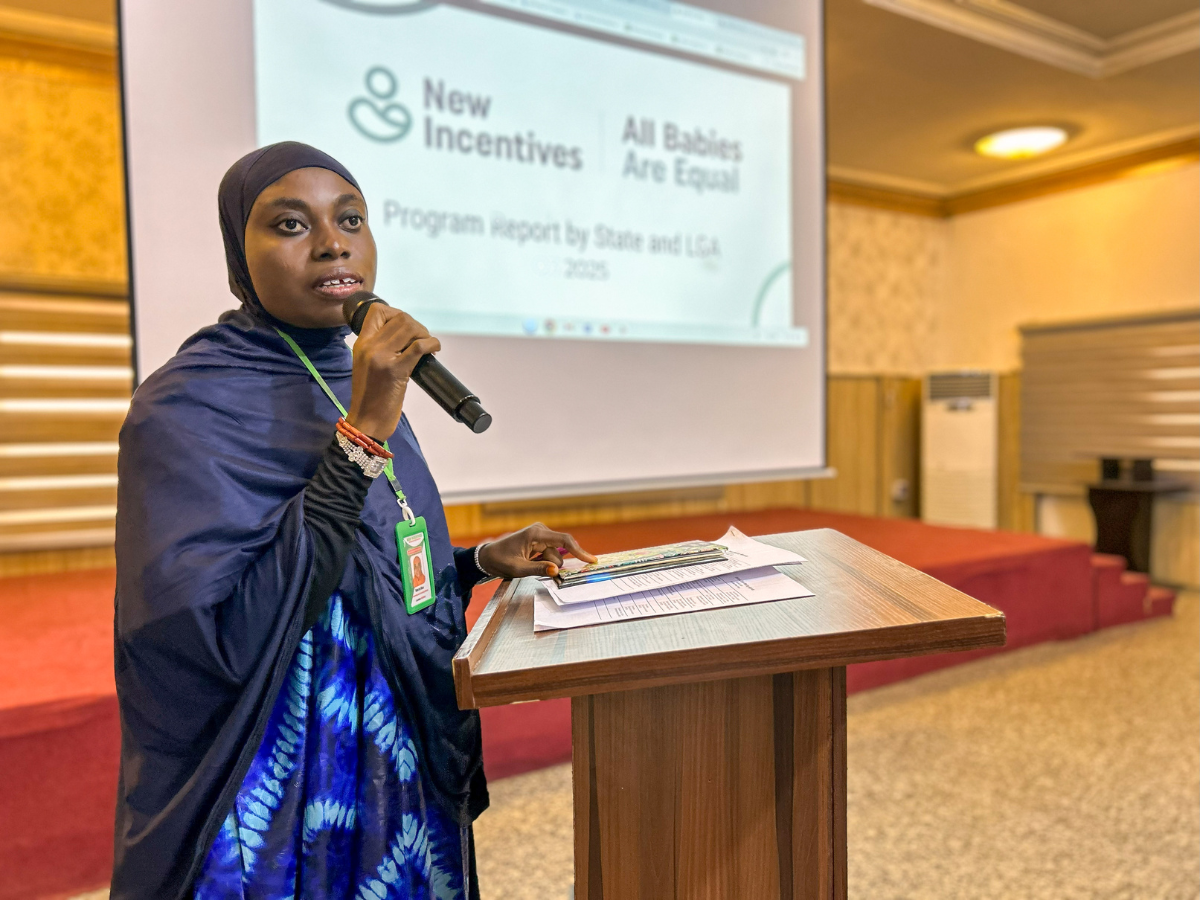
As of the third quarter of 2025, the program has enrolled 5.6 million infants across 204 local government areas, supporting vaccination services in 7,128 clinics and 60,000 settlements. Since inception, over 85 million vaccinations have been encouraged through the program, and ₦32 billion have been disbursed directly to caregivers.
These achievements are more than numbers—they represent healthier children, stronger community trust, and a more responsive immunization system. Yet, as the discussions made clear, continued success depends on reliable logistics.
From Policy to Practice
Representing Niger State, Sa’idu Abubakar Hussain shared his experience as an SCCO in the field.
“All Babies has done a great job increasing vaccination awareness and turnout in Niger State,” he said. “With their support, caregivers now come out in large numbers. We hope the program expands nationwide so every child benefits from these life-saving vaccines.”
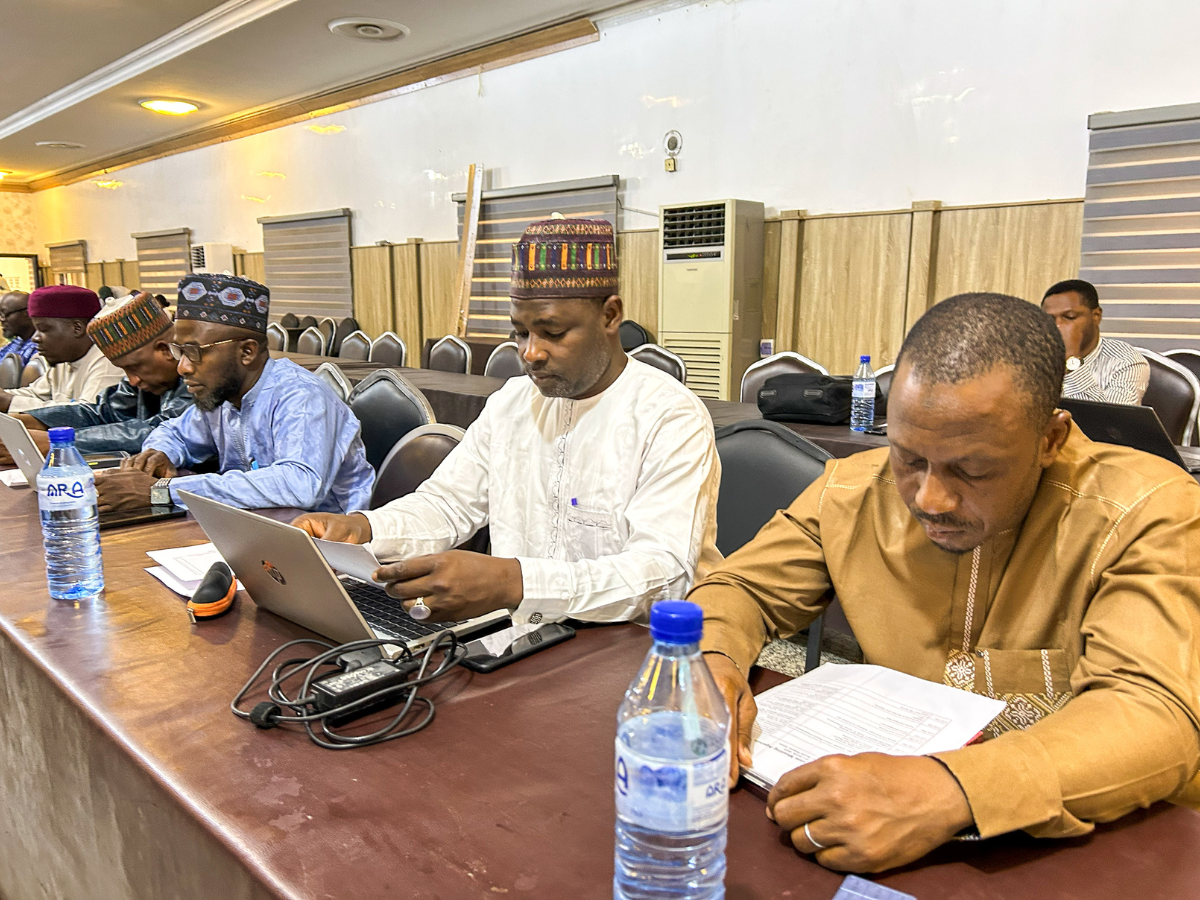
Participants discussed vaccine shortages—especially rota vaccine delays—while reaffirming that shipments were expected early November 2025. They also committed to training routine immunization providers on better stock management, enhancing state–LGA coordination, and enforcing OpenLMIS compliance through weekly supervision.
To address persistent “last mile” challenges, attendees agreed to collaborate with the Association of Local Governments of Nigeria (ALGON) to advocate for transportation and logistics funding. Many cold chain officers noted that even when vaccines are available at state stores, moving them to remote clinics remains costly and inconsistent.
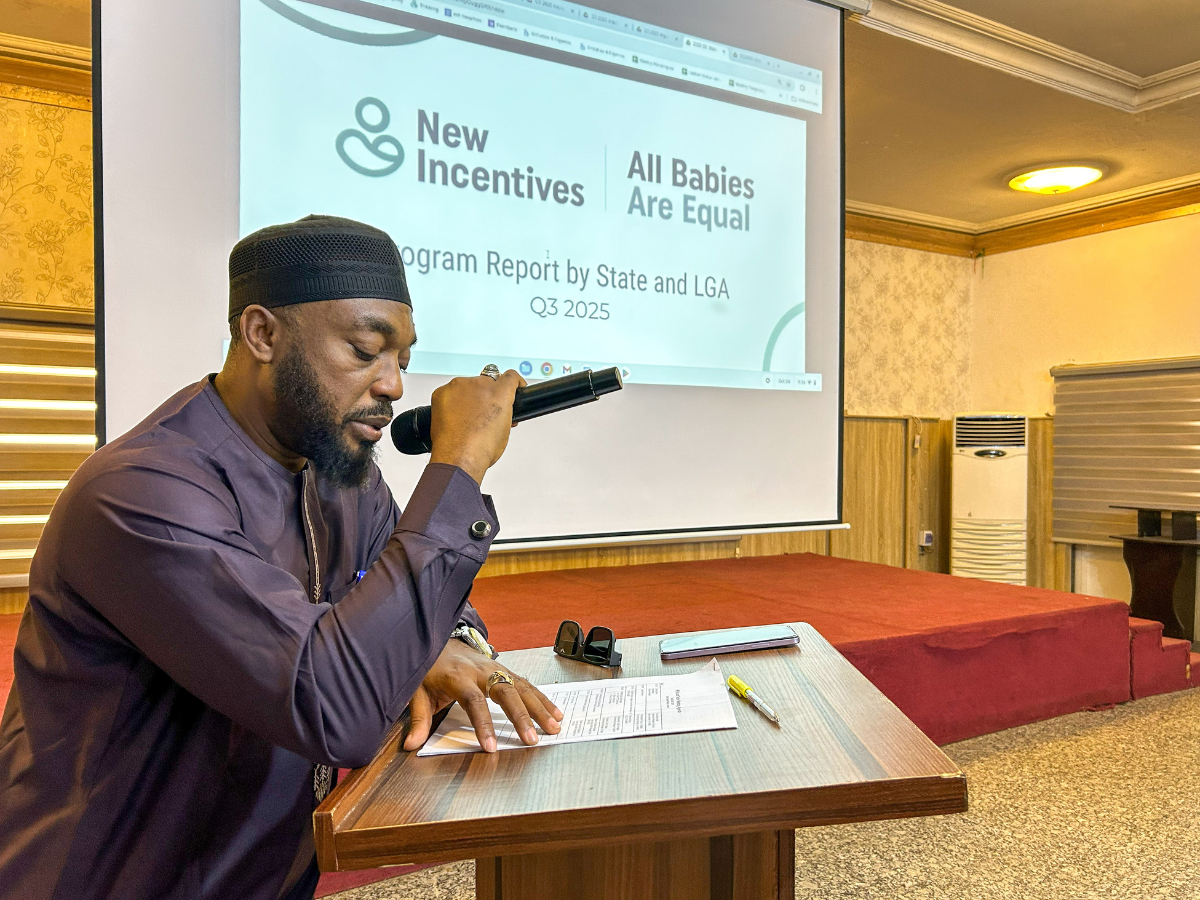
“Vaccines don’t save lives until they reach a child,” summarized Abdulwahab Yusuf, Senior States Partnerships Manager at All Babies, during the plenary session. “Our job is to make sure they get to them, every time.”
Sustaining Collaboration
This was the sixth in-person roundtable since the series began in 2023, complemented by monthly virtual sessions that sustain coordination between state and zonal officers. The hybrid model has become a backbone for cross-state collaboration, fostering a peer-learning environment where officers share innovations and troubleshoot real-time distribution challenges.
At the close of the meeting, participants signed a joint communiqué outlining commitments to:
- Train RI providers on stock management.
- Improve vaccine movement from LGA and state stores to clinics.
- Implement Niger State’s one-time supply model for hard-to-reach areas.
- Hold zonal meetings in Kano to address facility-level pickup delays.
A Shared Commitment
As Nura Muhammad reflected, the roundtable is more than a technical review; it is a testament to partnership. “Every child deserves timely access to vaccines,” he said. “That’s why we’re here to ensure that systems work, that collaboration continues, and that no community is left behind.”
The meeting closed with a renewed sense of purpose: connecting data to delivery, state systems to local realities, and partners to one another—all to reach that final mile where a child’s life can change with a single vaccine.
The All Babies program remains committed to supporting governments and communities to build a more reliable vaccine supply system. Together, we can close the last-mile gap and ensure that every child, no matter how remote their home, receives life-saving immunization on time.
%20(4).png)



.png)