Home - Blog
Sokoto, Kebbi, and Zamfara Stakeholders Agree on Actions to Strengthen Routine Immunization
Government stakeholders from Sokoto, Kebbi, and Zamfara States have agreed on measures to improve routine immunization data, vaccine management, outreach planning, caregiver awareness, and coordination.
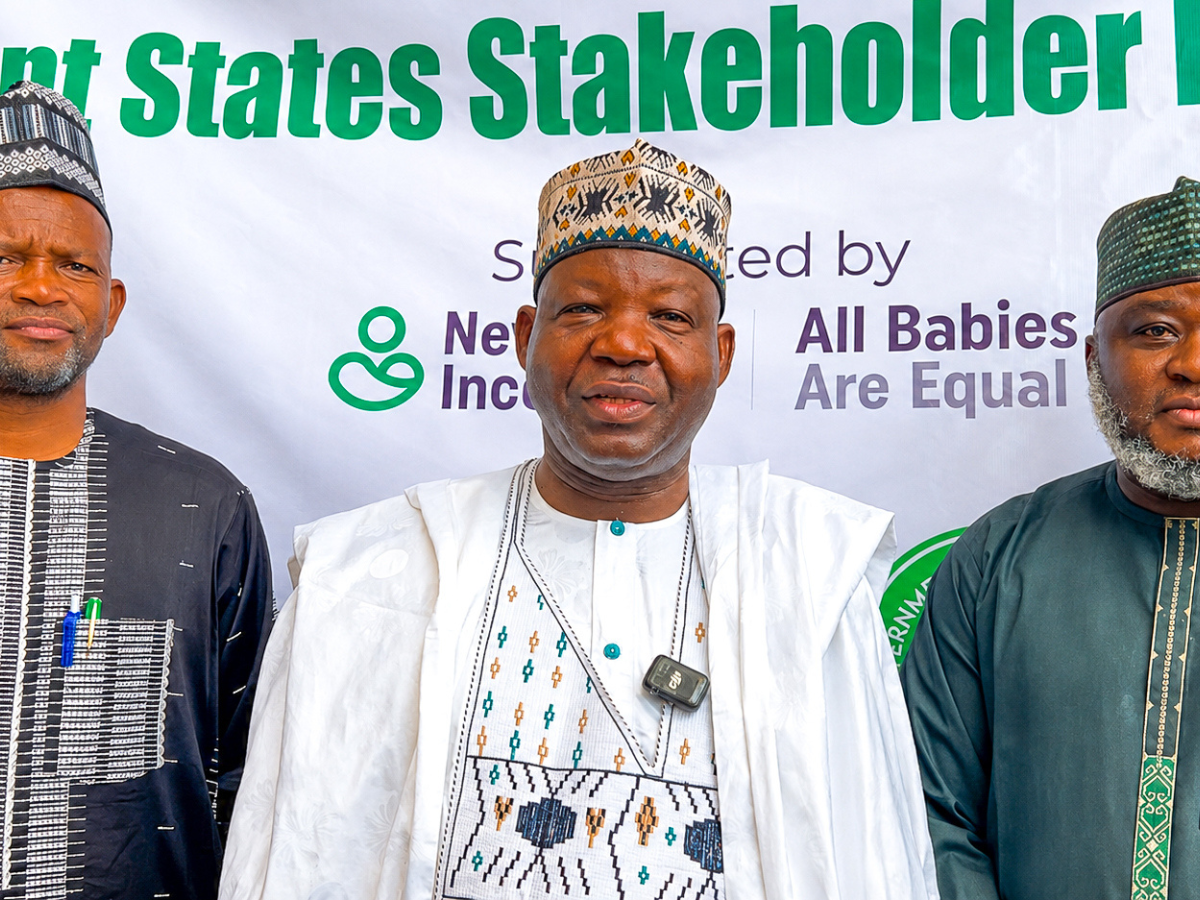
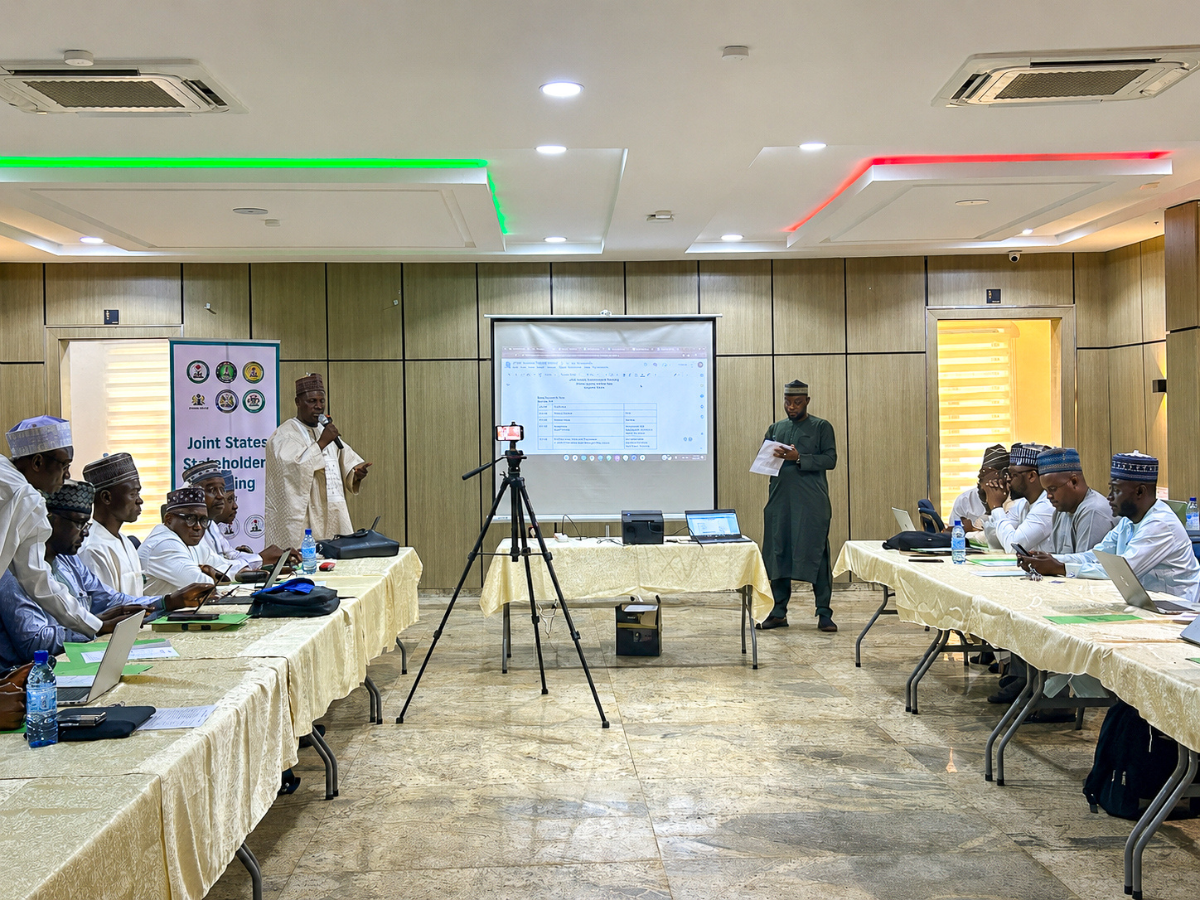
The commitments were reached during a two-day Joint States Stakeholders Meeting (JSSM) organized by New Incentives – All Babies Are Equal in Sokoto on August 10 and 11, 2026.
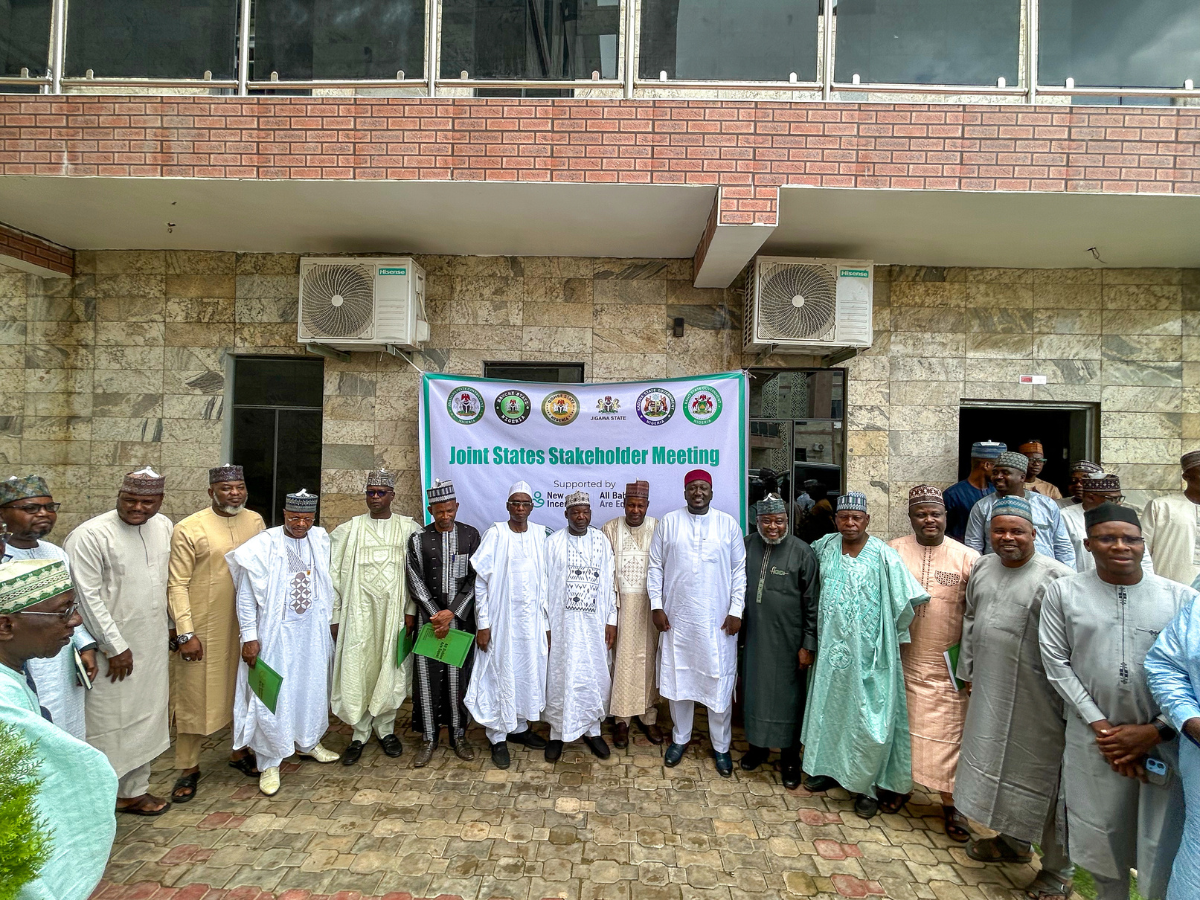
The meeting brought together 34 representatives from the three states’ ministries of health and primary health care agencies and boards. Representatives of the National Primary Health Care Development Agency (NPHCDA), Sultan Foundation for Peace and Development (SFPD), and the National Traditional Leaders Council also participated.
Participants reviewed All Babies’ program progress, states’ and LGAs' immunization performance, immunization coverage assessments, vaccine supply protocols, ABAE vaccination session coverage, community feedback, and sustainability planning. They also discussed the barriers affecting caregivers’ access to routine immunization services.
Reviewing progress and identifying gaps
All Babies Are Equal presented updates on its program results, caregiver incentives, vaccine supply support, community engagement, behavioral change efforts, and pilot interventions.
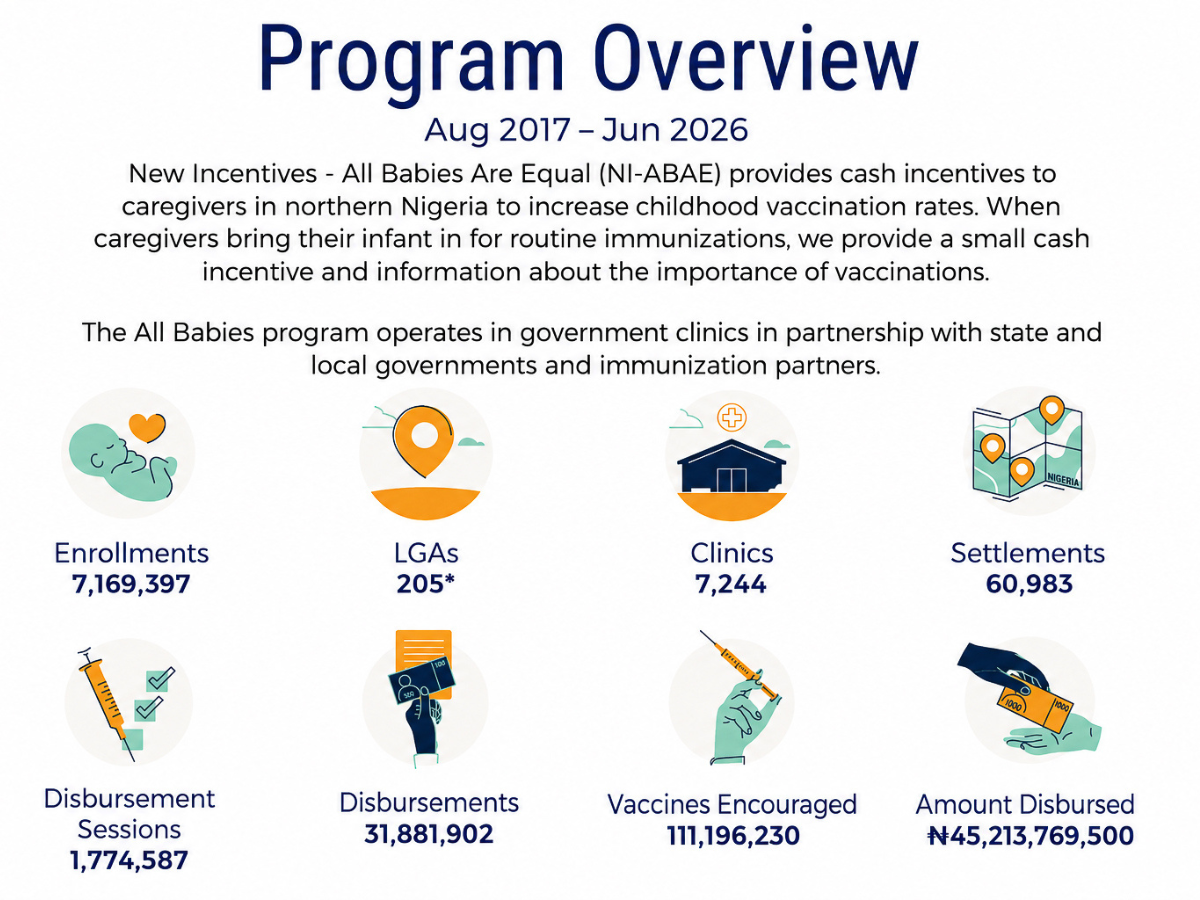
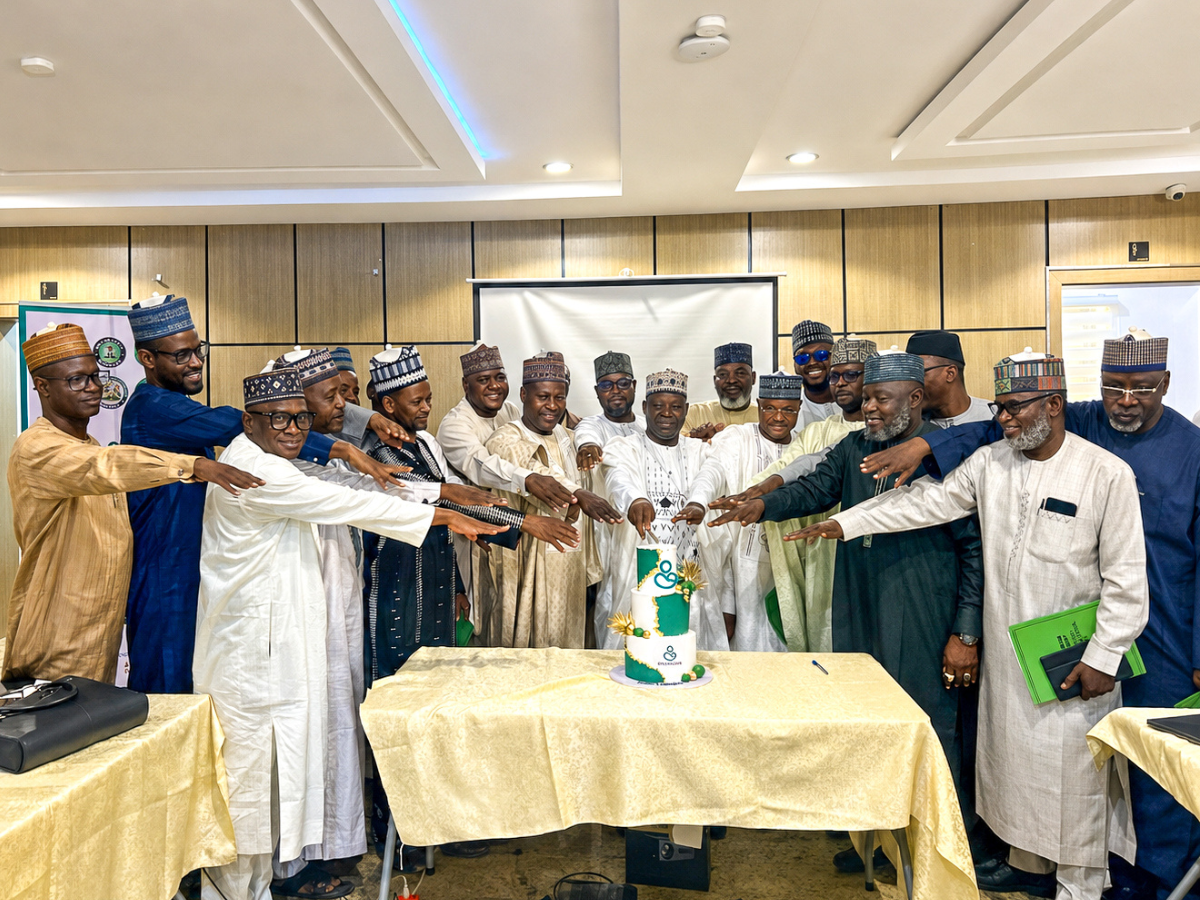
As of the end of the second quarter of 2026, the All Babies Are Equal program had enrolled more than 7.1 million infants and encouraged more than 111 million vaccinations across 11 northern Nigerian states. The participants celebrated the enrollment milestone during the meeting.
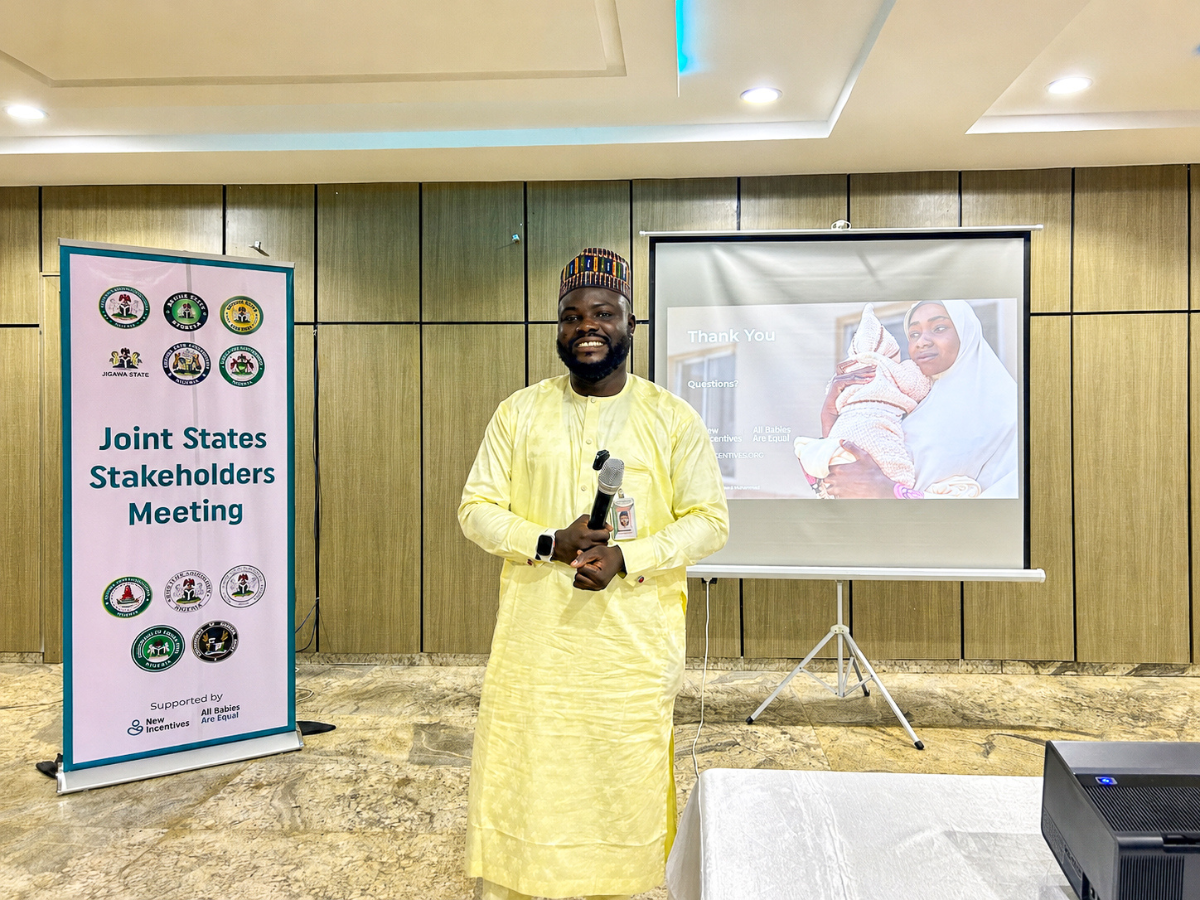
Mubarak Muhammad Bawa, Operations Director at New Incentives – All Babies Are Equal, said the meeting allowed government and program teams to examine progress and identify areas requiring more attention.

“The meeting provides an opportunity to review program data and assess the progress, gaps, and implementation challenges recorded so far,” Bawa said.
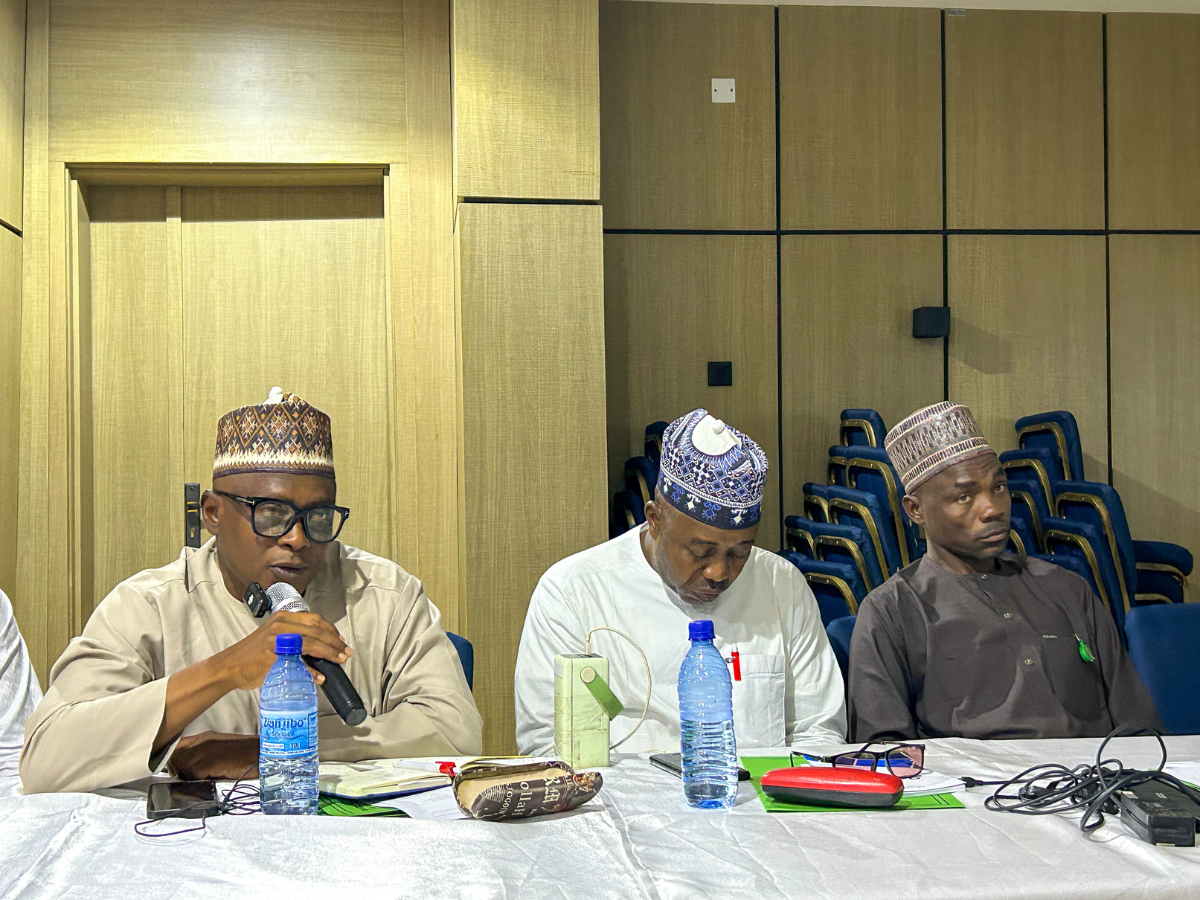
Representatives of the three states presented their experiences and discussed approaches that could improve routine immunization performance.
Dr. Hussaini Yakubu Anka, Executive Secretary of the Zamfara State Primary Health Care Management Board and chair of the meeting, said in his opening remarks that the engagement created an opportunity for collaborative learning.
“By sharing lessons across the three states, we can identify practical ways to address gaps and improve program implementation,” he said.
Addressing barriers faced by caregivers
The participants identified transportation costs, difficult terrain, safety concerns, coverage challenges for additional sessions, and limited access to accurate information as continuing barriers, particularly in rural communities.
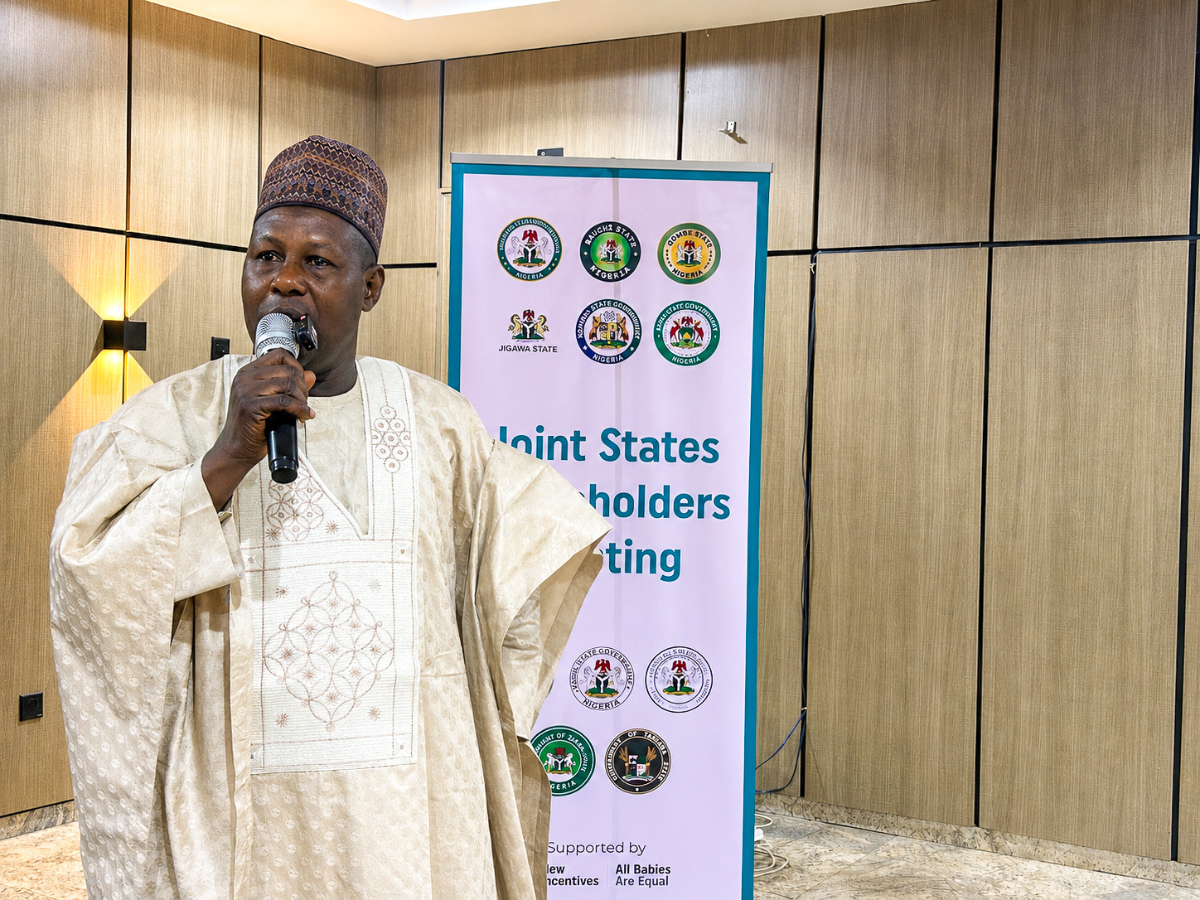
“Many caregivers understand the importance of vaccination and want to take their children to health facilities. However, transportation from their communities to the facilities can be a major barrier,” said Anka.
All Babies Are Equal provides conditional cash transfers to eligible caregivers who bring their infants for scheduled routine immunization visits at participating government health facilities. The incentives help offset transportation costs and replace income caregivers may lose while attending immunization sessions.
The program also supports caregiver education, community awareness activities, defaulter tracking, messaging on television and radio programs, and engagement with government, traditional, and religious institutions.
During a presentation on All Babies’ behavior change communication activities, Communications Associate Misbahu Hamza explained that routine immunization depends on caregivers having trusted information they can act on. He outlined how community engagement and monthly radio programs help address concerns, gather feedback, and improve caregivers’ understanding of routine immunization.
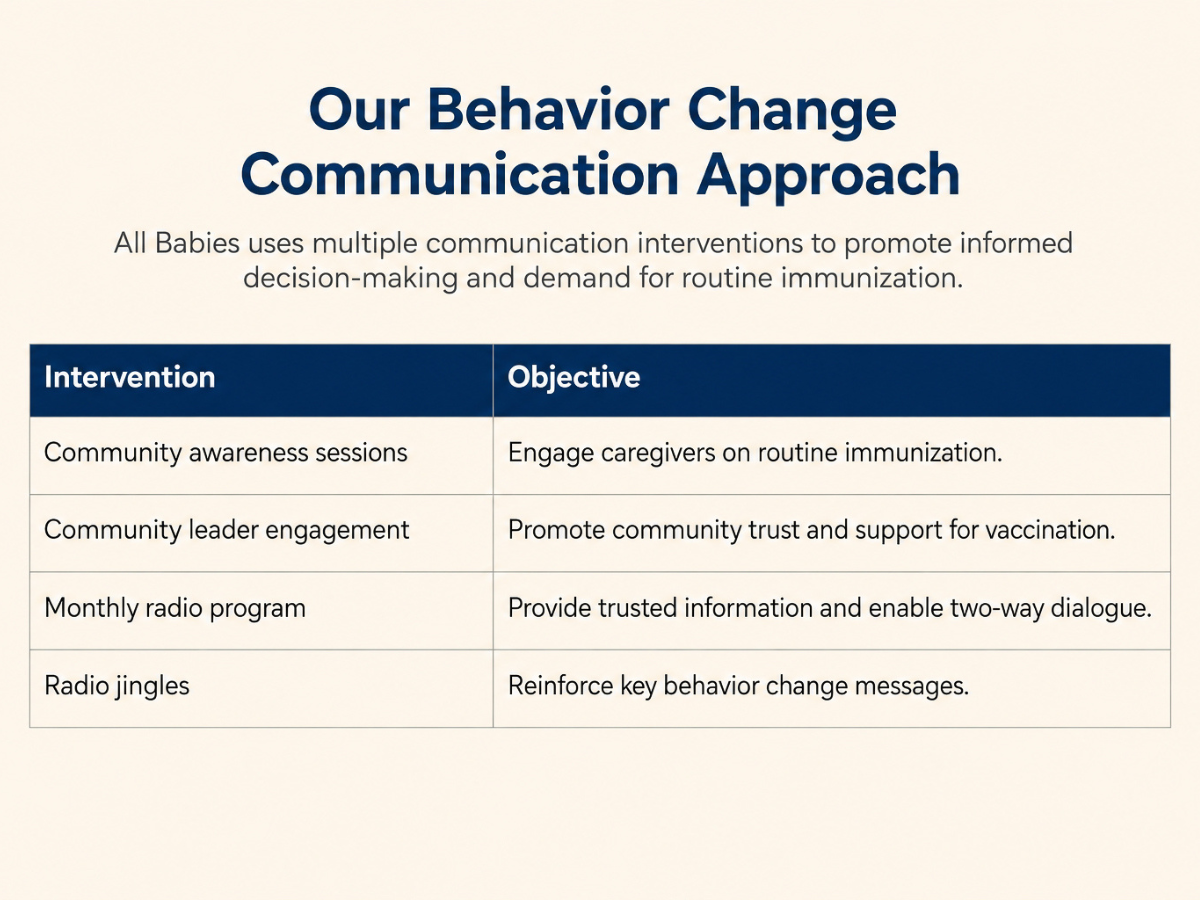
“Caregivers need accurate information about why immunization is important, where services are available, when their children should receive each vaccine, and how to complete the vaccination schedule,” said Misbahu.
Stakeholders recommended more deliberate engagement with husbands, community groups, traditional leaders, and religious leaders. They identified Friday sermons, community meetings, and radio programs as useful channels for addressing misconceptions and improving knowledge of routine immunization. Zamfara State’s quarterly engagement with traditional leaders was also cited as an approach from which other states could draw lessons.
Improving data and vaccine management
Data quality was a recurring subject during the meeting. Participants raised concerns about differences among facility records, program data, local government reports, and data reported through the District Health Information Software 2 (DHIS2). The stakeholders agreed to strengthen daily reporting of immunization data and conduct monthly data harmonization. They also requested greater involvement of state monitoring and evaluation teams in the program's rapid assessments.
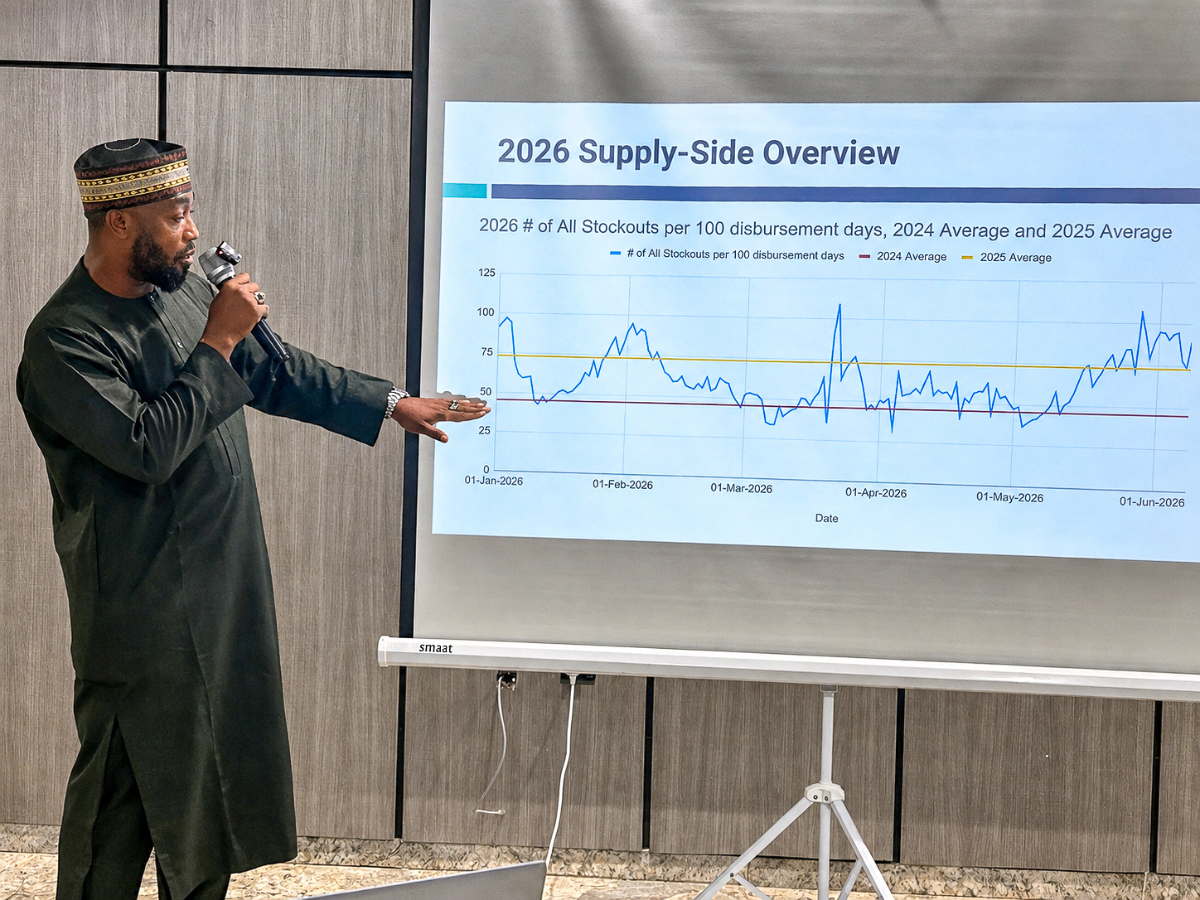
Discussions on vaccine supply identified microplanning and forecasting challenges, delayed requisitions, and vaccine management obstacles as factors contributing to stockouts and wastage. On this issue, the participants agreed to improve routine immunization microplanning, vaccine forecasting, and reporting through the Open Logistics Management Information System (OpenLMIS). They also called for stronger supportive supervision, clearer accountability, and regular capacity development for vaccine logistics personnel and service providers.
Strengthening government ownership

Government leadership has a clear role in addressing shortages of health workers and sustaining improvements in routine immunization services. Zamfara State reported that approval had been granted to recruit more than 3,000 workers across the health sector. Kebbi State also reported the recruitment of more than 2,800 health workers. Dr. Faruk Umar Abubakar, Sokoto State Commissioner for Health, said collaboration among the three states could help address shared implementation challenges, adding that Sokoto State is investing substantially in health infrastructure.
He said, “We have renovated more than 160 primary health centers. Additional renovation projects have received approval. We expect the number of renovated facilities to approach 200 by the end of December.”
Participants also discussed how governments, communities, and partners can preserve routine immunization gains over the long term. Usman Dangogo, NPHCDA State Coordinator in Kebbi, supported the use of incentives to address caregivers’ immediate financial barriers but called for early sustainability planning and regular stakeholder reviews.

“I support providing cash incentives because they help caregivers overcome immediate economic barriers. However, we must plan for how immunization gains will be sustained when the incentives eventually end. Given its objectives and the opportunity it provides to review progress and challenges, the Joint States Stakeholders Meeting should be held annually,” Dangogo said.
All Babies clarified that the program is not currently winding down and that its existing funding runs through March 2028, and a funding request is pending for that to be extended through March 2029. Any future wind-down would involve advance notice and consultations with government and community stakeholders.