Home - Blog
How States Are Tackling Vaccine Stockouts
The 2026 Routine Immunization Roundtable, supported by All Babies, brought together national and state stakeholders to address last-mile vaccine stockouts, strengthen supportive supervision, and introduce a new All Babies dashboard that gives state teams better access to program data for quicker action.
A health facility can run out of vaccines even when those vaccines are available elsewhere in the supply chain.
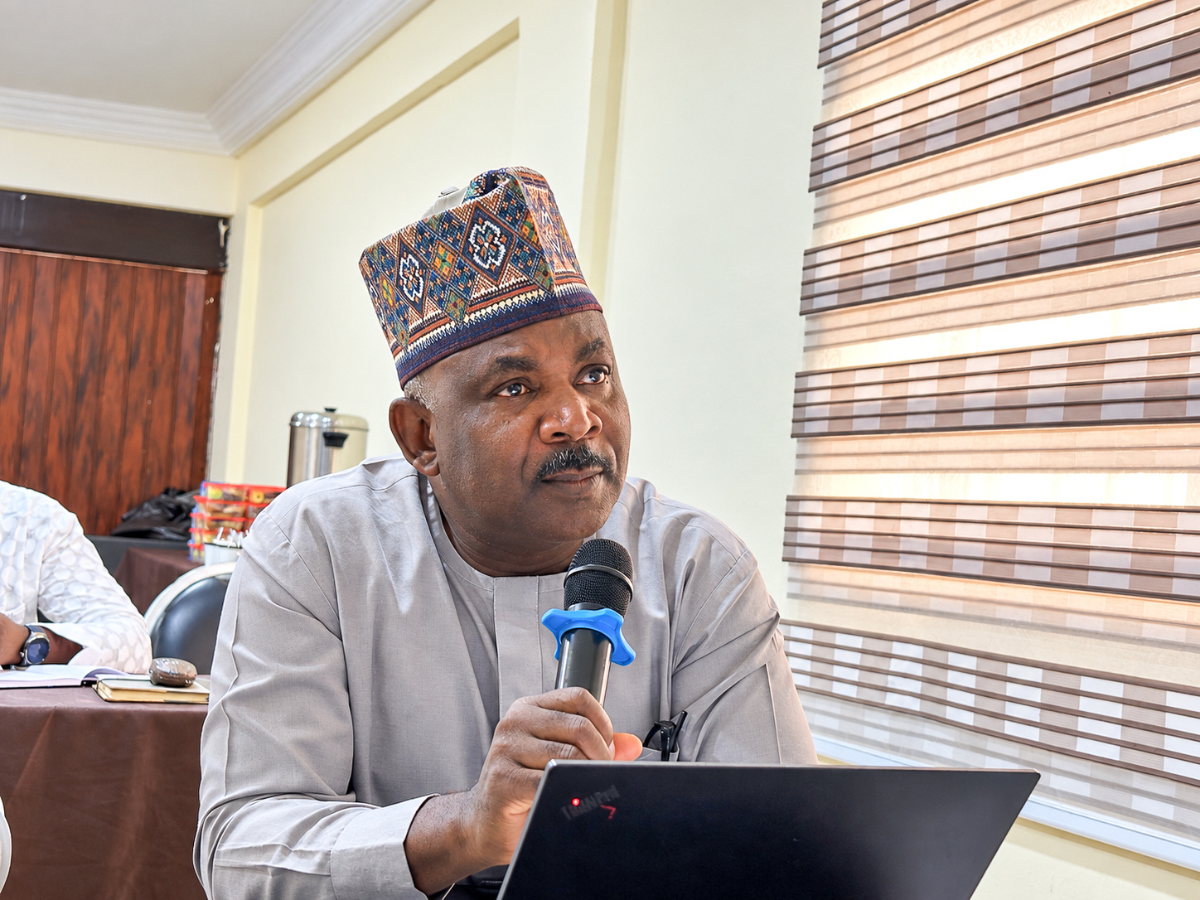
This was one of the challenges examined by routine immunization stakeholders at the 2026 Routine Immunization Roundtable Meeting in Kano State.
Participants reviewed vaccine stock data, findings from supportive supervision visits, and other supply chain challenges affecting health facilities across states where the All Babies program operates.

The discussions showed that vaccine availability at the state or LGA level does not always translate into availability at every health facility. Stock monitoring, vaccine collection and redistribution, documentation, and coordination between facilities can help vaccines reach the places where they are needed.
Participants called for stronger stock monitoring, timely redistribution, better vaccine collection arrangements, and closer coordination between apex and cascade facilities.
Finding problems at the facility level
In Zamfara State, the State Cold Chain Officer (SCCO), Nasiru Yakubu, said he recently visited five health facilities in the state as part of supportive supervision supported by All Babies.
He found challenges related to vaccine stockouts and data management. Some facilities, he said, were still using an older version of a data tool that omitted some vaccine columns. He raised the issue with the relevant LGA officers, and updated tools were provided to the facilities.

After the visits, he met with the LGA team to discuss his findings and agree on actions. His next step is to follow up with the facilities to see whether those actions have been implemented.
This kind of follow-up was an important issue that was raised at the roundtable discussions. SCCOs presented findings from supportive supervision across participating states, including challenges related to infrastructure, power supply, documentation, stock management, temperature monitoring, vaccine collection, and facility-level capacity.
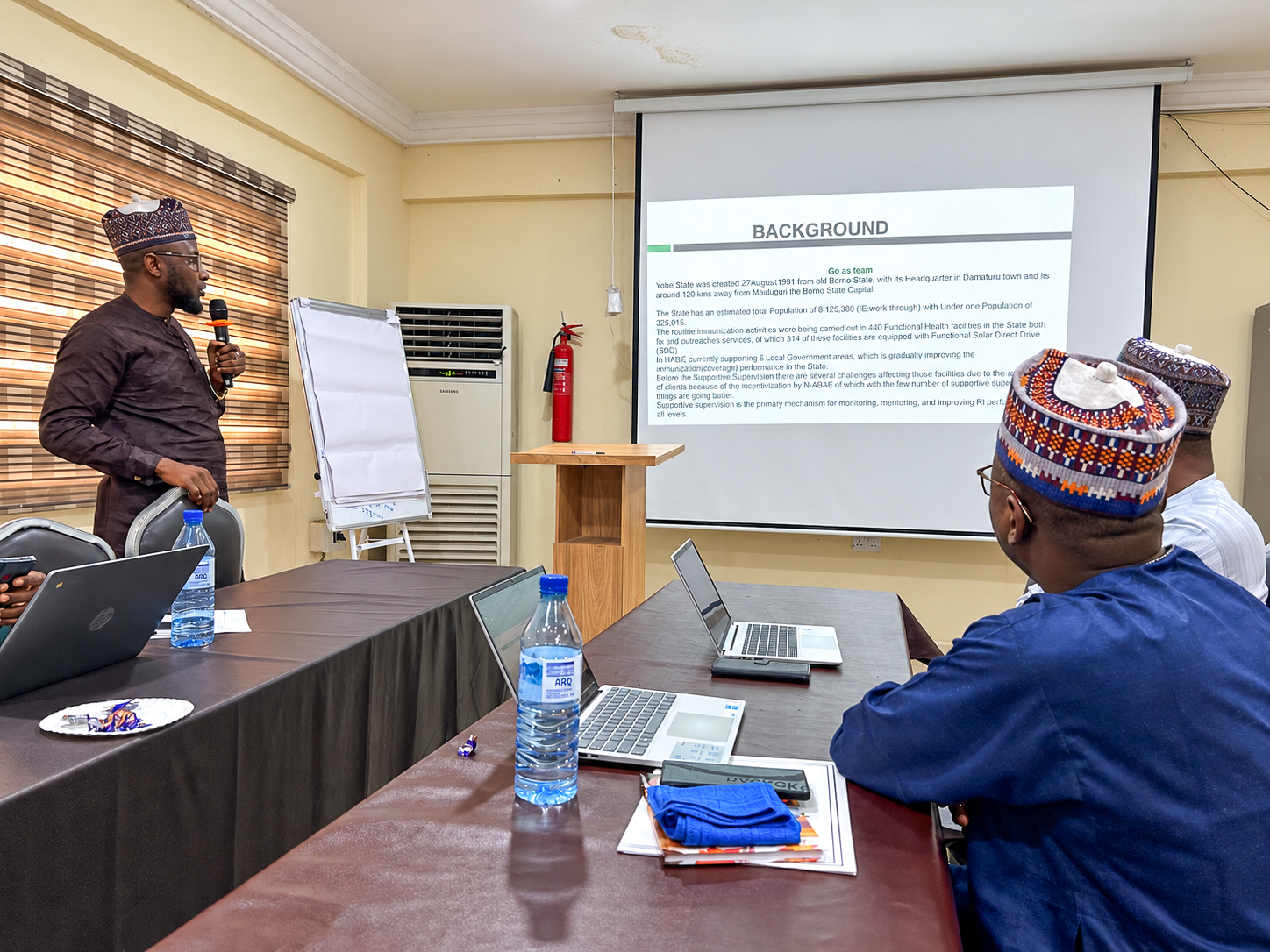
In Yobe State, SCCO Garba Ali said supportive supervision has helped his team investigate facilities experiencing repeated vaccine stockouts.
“Some of my facilities previously experienced repeated stockouts,” Ali said. “Through our supportive supervision, we found the root causes of those stockouts. We addressed them there and then, and the issue has become history.”
A new dashboard brings state data closer to decision-makers
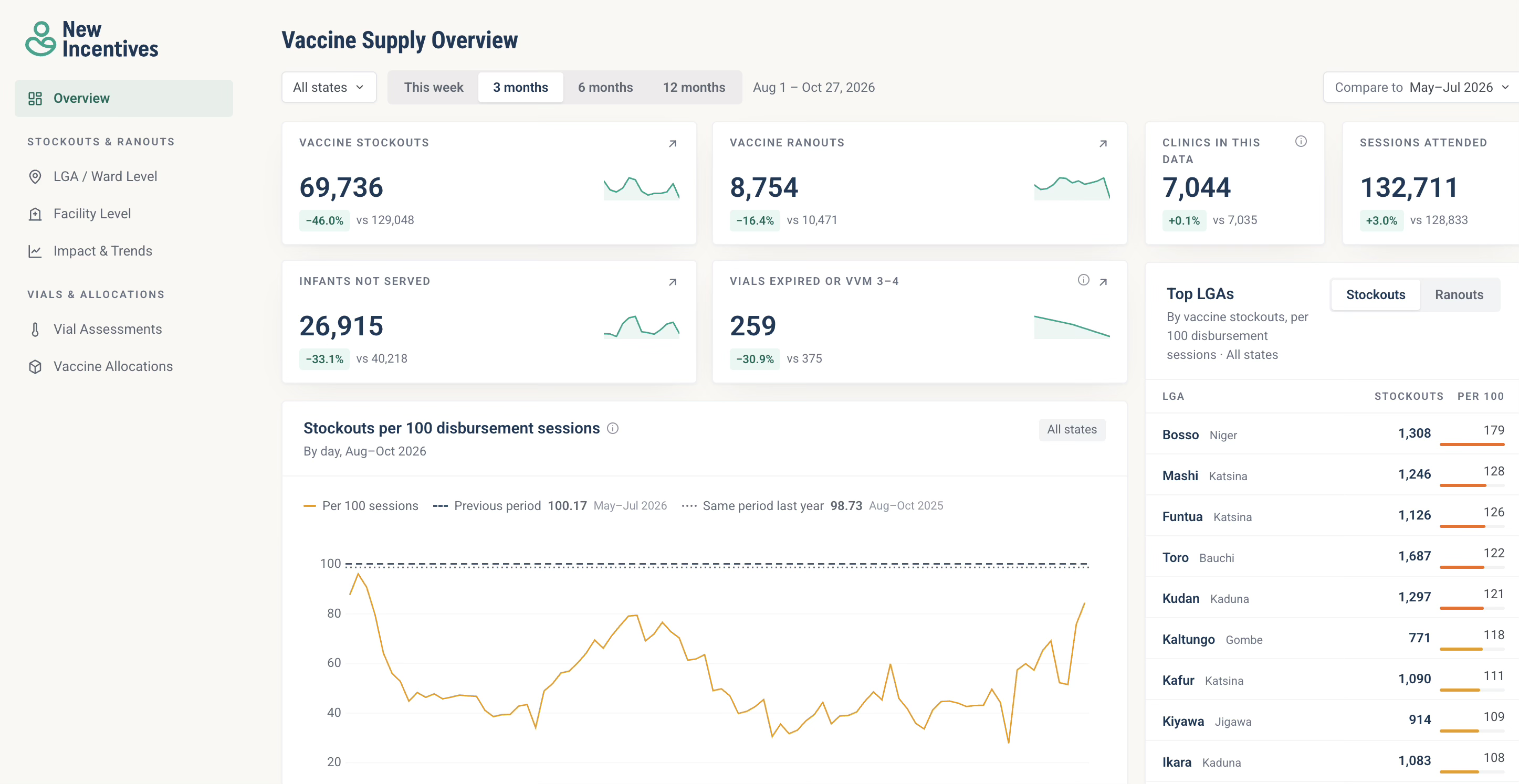
One development highlighted at the roundtable was the new All Babies Insights Dashboard that enables stakeholders to view program data, including information on vaccine stockouts and other indicators.
For state teams, having more direct access to facility-level data can shorten the time between identifying a problem and responding to it.
Yakubu said that previously, his team depended on feedback from All Babies to identify issues captured through program data.
“Previously, we had to wait for New Incentives All Babies Are Equal to provide feedback before we could take action,” he said. “Now, we can log in and see the situation in our state.”
For him, “the practical value is the opportunity to act earlier,” he mentioned.
“If we identify any issue, we can take immediate action before it is presented to us,” he added.
Ali said state stakeholders in Yobe had wanted greater visibility into All Babies data for some time.
“Our stakeholders were not seeing what was happening with the All Babies data,” he said. “Our SIOs [state immunization officers] can now see what is happening. They will see the improvements, where we were before, and where we are now.”
The dashboard complements other data systems discussed during the meeting. Participants reviewed the use of OpenLMIS and identified discrepancies between reported data and other stock information in some states. They agreed that reported figures should be validated against physical stock, facility records, consumption patterns, and other source documents.
The aim is not simply to have more data, but to make information available to the people who can use it to identify gaps and take action.

From identifying a stockout to addressing it
The meeting also examined what happens after a problem is identified.
Participants agreed that state and LGA teams should routinely monitor vaccine stock levels and redistribute vaccines from locations with sufficient or excess stock to facilities experiencing shortages. Particular attention was given to the movement of vaccines from LGA or apex facilities to cascade facilities, based on actual need.
Supportive supervision will also continue, with priority given to facilities and LGAs experiencing persistent stock-management challenges. Findings are expected to be documented in action plans, assigned to responsible actors, and followed up until corrective actions are completed.
Participants also agreed to strengthen vaccine quality and expiry management and to report data from fixed and outreach immunization sessions separately. Separating the data is expected to make it easier to understand where reported stockouts and other service-delivery problems are occurring.
Keeping vaccines available at the last mile
The 2026 Roundtable brought together representatives of the National Primary Health Care Development Agency, SCCOs, and All Babies teams to review routine immunization performance and vaccine supply chain challenges.

The meeting built on a process that began in 2023, with the roundtable providing a platform for national and state stakeholders to review vaccine supply chain performance and agree on practical responses to identified problems.
For the state officers responsible for vaccine management, of course, the work continues after the meeting.
Yakubu plans to follow up with the facilities he visited in Zamfara to determine whether the agreed actions have been carried out. In Yobe, Ali's experience shows how supportive supervision can help identify the causes of repeated stockouts and guide corrective action.
The new dashboard adds another tool to that work by giving state stakeholders greater visibility into program data and the opportunity to identify emerging issues earlier.